
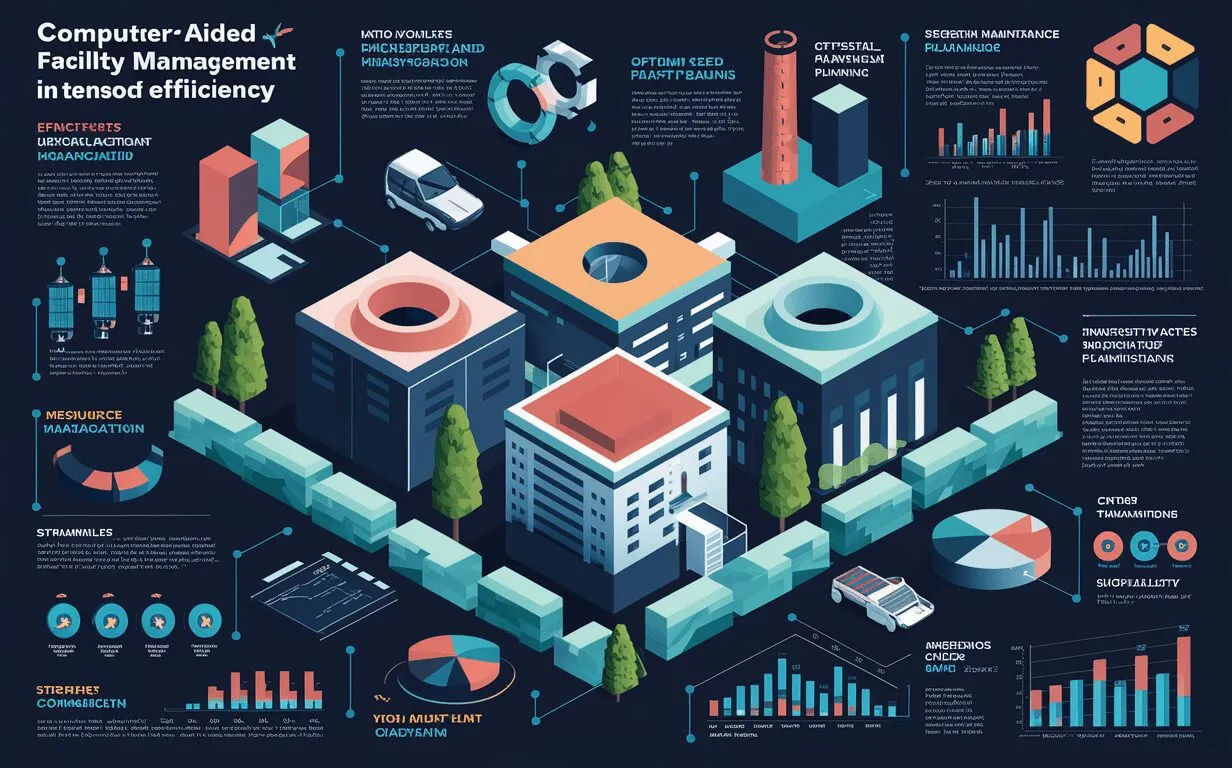
Computer Aided Facility Management (CAFM) is a concept for supporting facility management through the use of information technology. CAFM systems integrate various functions such as space management, maintenance, energy management, and resource planning into a central software solution. The goal is to optimize the management and operation of buildings and technical facilities.
CAFM systems enable a holistic view of facility management processes. They offer functions for capturing, managing, and evaluating building and facility-related data. This allows workflows to be designed more efficiently, costs to be reduced, and overall plant effectiveness to be increased.
The core functions of CAFM systems include:
– Space management and room planning
- Management of technical facilities and inventory
- Maintenance planning and control
- Energy management and consumption recording
- Budget planning and cost control
- Reporting and analysis
By integrating these functions into one system, a central database is created. This enables improved transparency, informed decisions, and optimized resource utilization in facility management.
Correct determination of VAT liability
- CAFM plays an important role in increasing efficiency and overall equipment effectiveness in companies.
- Through CAFM, resource utilization can be improved and optimized.
- Automated processes through CAFM contribute to increasing operational efficiency.
- Maintenance planning and execution can be optimized through CAFM.
- CAFM systems increase transparency and control over assets and resources.
Improving Resource Utilization through CAFM
Optimize resource utilization
By integrating space planning, resource management, and energy management, CAFM systems enable the optimization of facility and resource utilization. This includes the efficient use of office space, assignment of workstations, inventory management, and monitoring of energy consumption.
Cost reduction and efficiency increase
By providing a holistic view of resource utilization, CAFM systems allow companies to reduce costs and increase efficiency. Furthermore, CAFM enables better planning and organization of resources, leading to more efficient use. By automating processes such as room reservations, workstation assignments, and inventory management, companies can ensure that resources are optimally utilized.
Increasing Productivity and Satisfaction
This not only contributes to cost savings but also increases employee productivity and satisfaction. Overall, improving resource utilization plays a crucial role in increasing efficiency and maximizing overall plant effectiveness through CAFM.
Increasing Operational Efficiency through Automated Processes
Another important aspect of CAFM is increasing operational efficiency through automated processes. CAFM systems enable the automation of various operational workflows, such as maintenance planning, inventory management, workstation assignments, and more. By automating these processes, companies can save time, reduce human errors, and increase efficiency.
Furthermore, the automation of processes allows for a faster response to changing requirements and conditions. This helps to avoid bottlenecks and ensure that operational workflows run smoothly. Additionally, CAFM systems enable real-time data collection and analysis to make informed decisions and improve plant performance.
Overall, increasing operational efficiency through automated processes plays a crucial role in enhancing efficiency and maximizing overall asset effectiveness through CAFM.
Optimizing Maintenance Planning and Execution
Another important aspect of CAFM is the optimization of maintenance planning and execution. By integrating maintenance management into CAFM systems, companies can optimize their maintenance processes. This includes planning maintenance work, allocating resources, tracking maintenance activities, and monitoring asset performance.
By optimizing these processes, companies can reduce downtime, lower costs, and extend the lifespan of their assets. Furthermore, CAFM systems enable the implementation of preventive maintenance strategies to avoid failures and improve asset reliability. This helps reduce unexpected repairs and lower operating costs.
Furthermore, CAFM systems allow for the collection and analysis of data to make informed decisions and improve asset performance. Overall, optimizing maintenance planning and execution plays a crucial role in enhancing efficiency and maximizing overall asset effectiveness through CAFM.
Increasing Transparency and Control over Assets and Resources
Another important aspect of CAFM is increasing transparency and control over assets and resources. By integrating data management into CAFM systems, companies can gain a comprehensive view of their assets and resources. This includes information on asset condition, energy consumption, material inventory, and more.
By increasing transparency, companies can make informed decisions and ensure that their assets are optimally utilized. Furthermore, CAFM systems enable better control over assets and resources. This includes monitoring operational processes, tracking performance indicators, and implementing safety measures.
By increasing control, companies can minimize risks and ensure that their assets are operated efficiently. Furthermore, CAFM systems allow for real-time data collection and analysis to make informed decisions and improve asset performance. Overall, increasing transparency and control over assets and resources plays a crucial role in enhancing efficiency and maximizing overall asset effectiveness through CAFM.
Reducing Downtime and Costs through Preventive Maintenance
Preventive Maintenance as a Key to Increasing Efficiency
By implementing preventive maintenance strategies in CAFM systems, companies can reduce downtime and lower costs. This includes regular inspections, preventive maintenance measures, and timely identification of potential problems.
Increasing Productivity and Ensuring Smooth Operational Processes
By reducing downtime, companies can increase their productivity and ensure that their operations run smoothly. Furthermore, CAFM systems enable real-time data collection and analysis to monitor asset condition and respond to problems early.
Efficient Resource Planning and Minimizing Downtime
Furthermore, CAFM systems allow for the creation of preventive maintenance plans and efficient resource allocation to minimize downtime. Overall, reducing downtime and costs through preventive maintenance plays a crucial role in enhancing efficiency and maximizing overall asset effectiveness through CAFM.
Improving Sustainability and Environmental Compatibility through CAFM Systems
Another important aspect of CAFM is improving sustainability and environmental compatibility through CAFM systems. By integrating energy management into CAFM systems, companies can optimize their energy consumption and reduce their environmental impact. This includes measures for energy efficiency, monitoring energy consumption, and implementing sustainable practices.
By improving sustainability, companies can not only reduce costs but also minimize their ecological footprint. Furthermore, CAFM systems enable the collection and analysis of data on energy consumption to make informed decisions for improving energy efficiency. This helps maximize the use of renewable energy and minimize the consumption of non-renewable resources.
Furthermore, CAFM systems allow for the monitoring of environmental indicators and the implementation of sustainable practices in operational processes. Overall, improving sustainability and environmental compatibility plays a crucial role in enhancing efficiency and maximizing overall asset effectiveness through CAFM systems. Overall, Computer Aided Facility Management (CAFM) is a crucial tool for increasing efficiency and overall asset effectiveness in companies.
By integrating various functions such as space planning, resource management, maintenance management, and energy management, CAFM systems enable companies to optimize their operations, reduce costs, and improve their sustainability. The importance of CAFM for companies cannot be underestimated, as it helps them operate their assets more efficiently and strengthen their competitiveness in the market.
