Scalability

CAFM-Blog.de | Advantages of cloud technology: Efficiency and flexibility

Benefits of Cloud Technology: Efficiency and Flexibility

Cloud technology has rapidly evolved in recent years and has become an essential element in the corporate landscape. Cloud computing enables organizations to store and use their data and applications over the internet, rather than relying on local servers or individual devices. This technology offers numerous advantages, including cost efficiency, flexibility, scalability, and enhanced security standards. Cloud technology has fundamentally changed the way companies work and is expected to […] in the future.

Benefits of Cloud Technology: Efficiency and Flexibility Read more »

CAFM-Blog.de | Efficient Urban Processes with CAFM Integration

Digital Transformation: Digitalization Strategies in German Companies

Digital transformation has become a central theme for companies in Germany in recent years. In an increasingly interconnected world where technological innovations are advancing at a rapid pace, it is essential for companies to adapt to these changes. Digital transformation encompasses not only the implementation of new technologies but also the fundamental redesign of business models, processes, and corporate culture. For German companies, which are traditionally strong in their

Digital Transformation: Digitalization Strategies in German Companies Read more »

CAFM-Blog.de | The Future with Edge Computing

The Future with Edge Computing

Edge computing is a concept in information technology that moves data processing and analysis closer to the location where the data is generated. Instead of sending data to remote data centers, processing occurs directly at the edge of the network, close to the end devices or sensors. This enables faster data processing and reduces the volume of data to be transmitted. This technology is particularly important in areas that require real-time processing and low latency, such as Industry 4.0, the Internet of Things

The Future with Edge Computing Read more »

CAFM-Blog.de | The Future with Edge Computing

The Advantages of Virtualization in IT

Increasing efficiency through resource optimization is a key factor in the IT infrastructure of modern companies. Virtualization technologies enable improved resource utilization and maximum server utilization. This leads to more efficient use of existing hardware and optimization of the IT infrastructure without additional purchases. Server consolidation and application virtualization can reduce operating costs and increase IT system performance. Another advantage of resource optimization is the minimization of downtime. Server virtualization enables redundancies and increases fault tolerance, ensuring business processes continue uninterruptedly.

The Advantages of Virtualization in IT Read more »

CAFM-Blog.de | The Advantages of Cloud Computing

The Benefits of Cloud Computing

Cloud computing is a technology concept that enables the provision of IT resources over the internet. Users can access computing power, storage capacities, and applications without having to maintain them locally. Key benefits include cost efficiency, scalability, location-independent access, automatic updates, and improved collaboration capabilities. There are three primary service models: Infrastructure as a Service (IaaS): Provision of virtualized computer resources over the internet. Platform as a Service (PaaS): Development environments for creating and deploying

The Benefits of Cloud Computing Read more »

CAFM-Blog.de | Performance & Flexibility: CAFM Hosting for Successful Facility Management

Performance & Flexibility: CAFM Hosting for Successful Facility Management

CAFM hosting, also known as Computer-Aided Facility Management hosting, is a central component in modern facility management. It allows companies to operate their facility management software in a cloud environment. This offers several advantages: 1. Increased efficiency and optimized resource utilization 2. Improved performance and scalability 3. Access to a variety of specialized functions and services 4. Reduction of operating costs 5. Automatic updates and security updates CAFM hosting helps to streamline facility management processes

Performance & Flexibility: CAFM Hosting for Successful Facility Management Read more »

CAFM-Blog.de | Amazon AWS, Azure, and Oracle: Cloud and Data Services

Amazon AWS, Azure, and Oracle: Cloud and Data Services

Amazon Web Services (AWS) is a leading cloud platform that offers a wide range of services. These include computing, databases, storage, and content delivery. AWS enables companies to move their IT infrastructure to the cloud and benefit from scalability, flexibility, and cost efficiency. The platform is used by companies of various sizes and industries. AWS offers numerous services that allow companies to run applications and workloads in the cloud without having to worry about the

Amazon AWS, Azure, and Oracle: Cloud and Data Services Read more »

CAFM-Blog.de | Integration of Low-Code/No-Code in IT Infrastructures

Integrating Low-Code/No-Code into IT Infrastructures

Low-code/no-code is an innovative development method in software creation. This method enables the development of applications with minimal or no programming. Low-code development uses visual development tools that allow users to create applications by assembling pre-built components. No-code development goes a step further, enabling even individuals without technical expertise to create applications using predefined templates and visual tools. In recent years, the low-code/no-code movement has gained significant momentum

Integrating Low-Code/No-Code into IT Infrastructures Read more »

CAFM-Blog.de | When is a CMMS the Right Choice for You?

When is a CMMS the right choice for you?

A CMMS (Computerized Maintenance Management System) is an advanced software solution for optimizing maintenance and repair processes in companies. These systems function as a central data management tool for all asset and maintenance-related information. CMMS solutions enable efficient planning of maintenance work, management of work orders, tracking of spare parts, and continuous monitoring of asset performance. The core functions of a CMMS include: 1. Creation and management of maintenance plans 2. Work order management 3. Spare parts and inventory management 4.

When is a CMMS the right choice for you? Read more »

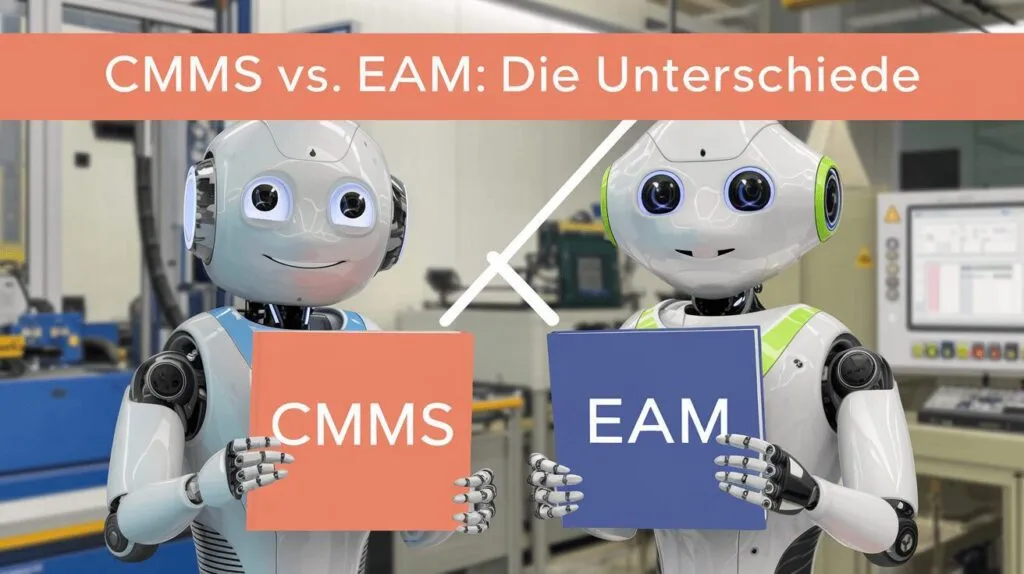
CAFM Blog.de | CMMS vs. EAM: The Differences

CMMS vs. EAM: The Differences

Software integration is a central aspect of modern information technology. It enables seamless interaction between different applications and systems. Through integration, companies can increase their efficiency and productivity by optimizing the exchange of data and processes between different systems. A significant advantage of software integration is the ability to improve existing systems and introduce new technologies without having to undertake a complete redesign of the IT infrastructure. This makes

CMMS vs. EAM: The Differences Read more »

CAFM-Blog.de | Efficient Property Management with CAFM Software

Efficient CAFM Software for Large Companies

Computer Aided Facility Management (CAFM) software is an essential tool for large companies to efficiently manage their real estate and facility management processes. This software enables effective management of properties and assets, optimization of maintenance processes, planning and monitoring of resources, and ensuring compliance with legal regulations. CAFM software provides important data and analyses to support informed decisions and increase operational efficiency. In the digital age, the use of

Efficient CAFM Software for Large Companies Read more »

CAFM-Blog.de | Performance & Flexibility: CAFM Hosting for Successful Facility Management

Effective CMMS Integration: Tips and Tricks

The integration of a Computerized Maintenance Management System (CMMS) is an essential step towards optimizing maintenance and repair processes in companies. A CMMS enables more efficient planning and execution of maintenance activities, improved resource utilization, and minimization of downtime. Through systematic management of spare parts and inventory, companies can achieve significant cost savings. An integrated CMMS supports the implementation of preventive maintenance strategies, which contributes to extending the lifespan of plants and machinery. It

Effective CMMS Integration: Tips and Tricks Read more »

CAFM-Blog.de | What Does an Operational Audit Mean?

Risks and Opportunities of Low-Code/No-Code Platforms

Low-code/no-code platforms are development tools that enable the creation of applications with minimal or no manual programming. These technologies aim to accelerate the development process and reduce the dependence on extensive programming knowledge. Low-code platforms offer a visual development environment where users can create applications by assembling pre-built components. No-code platforms go further, enabling application creation without any programming knowledge through the use of templates and visual tools. These platforms have

Risks and Opportunities of Low-Code/No-Code Platforms Read more »

CAFM-Blog.de | Successful Implementation of a CAFM Solution

Successful Implementation of a CAFM Solution

Computer Aided Facility Management (CAFM) is a digital tool for optimizing facility management in companies. CAFM systems offer comprehensive functions for managing buildings, facilities, and resources. They enable efficient planning and execution of maintenance work, inventory management, and support for space planning. The implementation of a CAFM solution requires careful planning and preparation to meet the specific requirements of the company. When selecting a CAFM solution

Successful Implementation of a CAFM Solution Read more »

CAFM-Blog.de | Successful Implementation of a CAFM Solution

CAFM Software for SMEs

Efficient facility management is of central importance for small and medium-sized enterprises (SMEs) to optimize operating costs and ensure a functional working environment. Facility management includes the management and organization of workspaces, buildings, technical facilities, and services to meet the requirements of employees and the company. For SMEs, efficient resource utilization and cost minimization are particularly important to maintain their competitiveness. Effective facility management contributes to the reduction of

CAFM Software for SMEs Read more »

Scroll to Top