Scalability

CAFM-Blog.de | The best tools for building management compared 2025

The best tools for building management in comparison 2025

The right software solution in FM is long more than just a tool – it is the key to efficiency, cost control, and strategic planning. As companies increasingly focus on digital transformation, CAFM and IWMS systems are rapidly gaining importance. The challenge lies not only in selecting the right technology but in intelligent integration that optimizes processes and intelligently controls resources. Modern building management tools today are far more than simple administrative software. They [...]

The best tools for building management in comparison 2025 Read more »

CAFM-Blog.de | Graph databases in Computer-Aided Facility Management: Revolution or facade?

Graph databases in Computer-Aided Facility Management: Revolution or Facade?

In an era where data is considered the new oil, we are experiencing a technological revolution in the field of computer-aided facility management. Graph databases are increasingly establishing themselves as an innovative solution for the challenges that arise in managing complex buildings and their technical systems. But are they actually a groundbreaking innovation or just a hyped trend? To answer this question, it is important to understand the characteristics and benefits

Graph databases in Computer-Aided Facility Management: Revolution or Facade? Read more »

CAFM-Blog.de | Top 10 CAFM Software Solutions for Small and Medium-sized Enterprises

Top 10 CAFM Software Solutions for Small and Medium-Sized Enterprises

In today's dynamic business world, small and medium-sized enterprises (SMEs) face a variety of challenges in facility management. Efficient property management, optimization of maintenance processes, and ensuring energy efficiency are just a few of the aspects that are in focus. One solution that is gaining particular importance in this context is CAFM software (Computer-Aided Facility Management). According to a study by ResearchAndMarkets, the market for CAFM software will reach [...] by 2027

Top 10 CAFM Software Solutions for Small and Medium-Sized Enterprises Read more »

CAFM-Blog.de | Cloud Computing: The Future of Data Processing

Innovations in Cloud Technology: The Future of IT

Cloud technology has become an indispensable part of the IT industry in recent years. It enables companies to store and manage their data and applications over the internet, rather than relying on local servers or hardware. This flexibility has not only revolutionized the way companies design their IT infrastructure but has also significantly increased the efficiency and agility of business processes. By using cloud services, companies can

Innovations in Cloud Technology: The Future of IT Read more »

CAFM-Blog.de | Increasing Efficiency in Facility Management

Efficient Cloud Management and Cost Optimization

Efficient cloud management is crucial in today's digital landscape. Companies that rely on cloud services not only benefit from the flexibility and scalability these technologies offer but must also ensure they are using their resources optimally. Well-structured cloud management enables organizations to control their IT costs, maximize application performance, and minimize security risks simultaneously. In an era where data is growing exponentially and the

Efficient Cloud Management and Cost Optimization Read more »

CAFM-Blog.de | Efficient Contract Management According to §2b UStG

Cloud Infrastructure and Scalability: The Advantages of Cloud Technology

Cloud infrastructure refers to the entirety of hardware and software resources provided over the internet to enable IT services. This infrastructure includes servers, storage, networks, and virtualization technologies housed in data centers. Instead of operating physical servers on-site, companies can access these resources to host their applications and data. Cloud infrastructure is typically managed by third-party providers who supply the necessary technology and expertise to ensure reliable

Cloud Infrastructure and Scalability: The Advantages of Cloud Technology Read more »

CAFM-Blog.de | How do I implement CAFM software in my company?

How do I implement CAFM software in my company?

Implementing CAFM software in your company can mean a decisive improvement for your facility management. Appropriate planning, choosing the right software, and involving the relevant stakeholders are essential for successful implementation. In this post, we will highlight the essential steps you should consider when implementing a CAFM solution. Step 1: Define Requirements Before the starting signal for the implementation of suitable CAFM software is given, it is essential to define the company-specific

How do I implement CAFM software in my company? Read more »

CAFM-Blog.de | Cloud Computing: The Future of Data Processing

Cloud Integration into Existing Systems: Efficient Connection of Cloud Services

Cloud integration refers to the process of connecting various cloud-based applications, services, and platforms to enable efficient and seamless use of data and resources. This process includes both connecting local systems with cloud services and integrating different cloud services with each other. Through cloud integration, companies can optimize their IT infrastructure, improve scalability, and increase their flexibility. It enables access to a variety of resources and functions from different providers without

Cloud Integration into Existing Systems: Efficient Connection of Cloud Services Read more »

CAFM-Blog.de | What is a Multi-Cloud Strategy?

What is a multi-cloud strategy?

Flexibility and scalability are central characteristics of cloud services. Flexibility allows companies to quickly adapt their resources to changing requirements. This can include increasing storage or computing capacity to handle peak demand. Scalability allows these adjustments to be made without much effort by adding or removing resources as needed. Another advantage is the rapid implementation of new technologies and applications. This promotes the agility of companies and

What is a multi-cloud strategy? Read more »

CAFM-Blog.de | The Future of Cloud Technology: Innovation and Growth

The future of cloud strategies

Cloud strategies are a central component of modern corporate IT. They enable companies to optimize their IT infrastructure, reduce costs, and react more flexibly to market demands. By using cloud services, companies can improve their agility and scalability as well as increase their operational efficiency. Cloud technology offers access to innovative solutions such as artificial intelligence, machine learning, and big data analytics. These technologies enable companies to remain competitive and tap into new business opportunities.

The future of cloud strategies Read more »

CAFM-Blog.de | The Future of Cloud Technology: Innovation and Growth

The Future of Cloud Technology: Innovation and Growth

Cloud technology has evolved significantly since its beginnings in the 1960s. Originally, it was based on the concept of "time-sharing," where multiple users could access a central computer simultaneously. In the 1990s, the development of virtual machines led to the ability to run multiple operating systems on a single physical computer, forming the basis for modern cloud infrastructure. Today, cloud technology encompasses a wide range of services, including Infrastructure as

The Future of Cloud Technology: Innovation and Growth Read more »

CAFM-Blog.de | The Advantages of Windows Server

The advantages of Windows Server

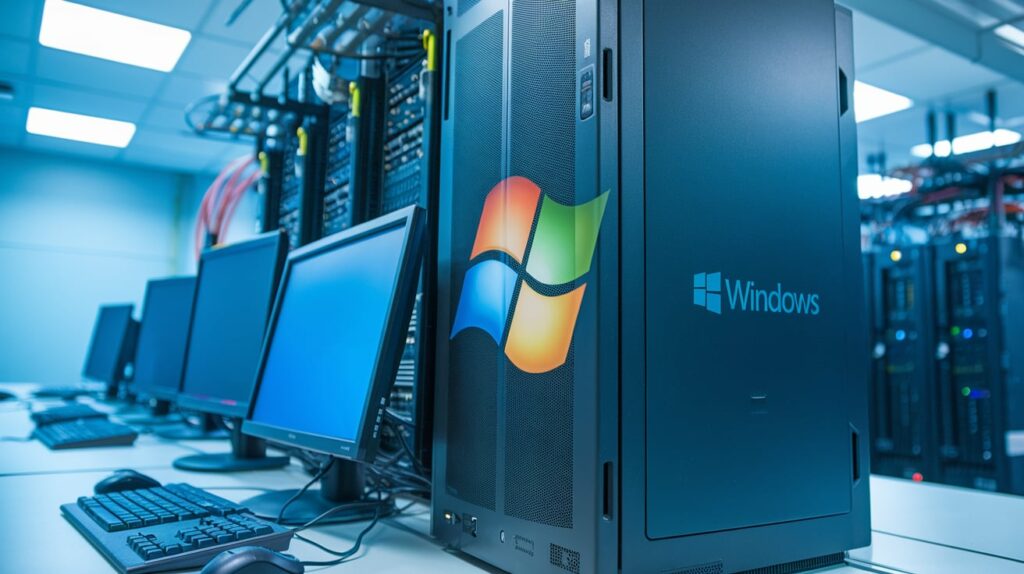
The integration of Windows Server into existing Windows infrastructures is a central aspect for optimizing IT systems in companies. Windows Server allows for seamless integration into existing Windows environments, simplifying implementation and administration. The use of Active Directory enables efficient management of user accounts and groups, thereby increasing the security and efficiency of the IT infrastructure. Furthermore, the integration of Windows Server allows for smooth interaction with other Microsoft products such as

The advantages of Windows Server Read more »

CAFM-Blog.de | Security Audit: How to Protect Your Company's IT

Cloud Security: Tips and Best Practices

Cloud security is of paramount importance for companies. With the increasing use of cloud services for corporate data and applications, it is essential to implement robust security measures. The cloud offers numerous advantages such as scalability, flexibility, and cost-effectiveness, but it also entails specific security risks. Companies must protect their data from threats such as data loss, data breaches, and unauthorized access. Compliance with legal regulations and industry standards is another critical aspect of

Cloud Security: Tips and Best Practices Read more »

CAFM-Blog.de | Microsoft Azure: Risk Without Qualified Knowledge

Microsoft Azure: Risk Without Qualified Knowledge

In today's digital landscape, Microsoft Azure stands out as a powerful cloud platform that can help businesses, including those supported by the federal government, reach new heights. But: Utilizing its capabilities without the right expertise can lead to significant security risks. This article explores the benefits of Microsoft Azure, the potential pitfalls of using it without in-depth knowledge, and how proper certification can protect your company's data. Additionally

Microsoft Azure: Risk Without Qualified Knowledge Read more »

CAFM-Blog.de | Comparison of Windows and Linux Servers: Which is Better?

Comparison of Windows and Linux Servers: Which is Better?

Windows and Linux are two widely used operating systems for server applications. Windows Server, developed by Microsoft, is specifically designed for enterprise networks and offers features such as Active Directory for central user management, Remote Desktop Services for remote access, and extensive security and management tools. Linux is an open-source operating system based on Unix, characterized by high stability, security, and adaptability. It is frequently used in web servers, database servers, and other enterprise infrastructures. Windows Server is characterized by

Comparison of Windows and Linux Servers: Which is Better? Read more »

Scroll to Top