
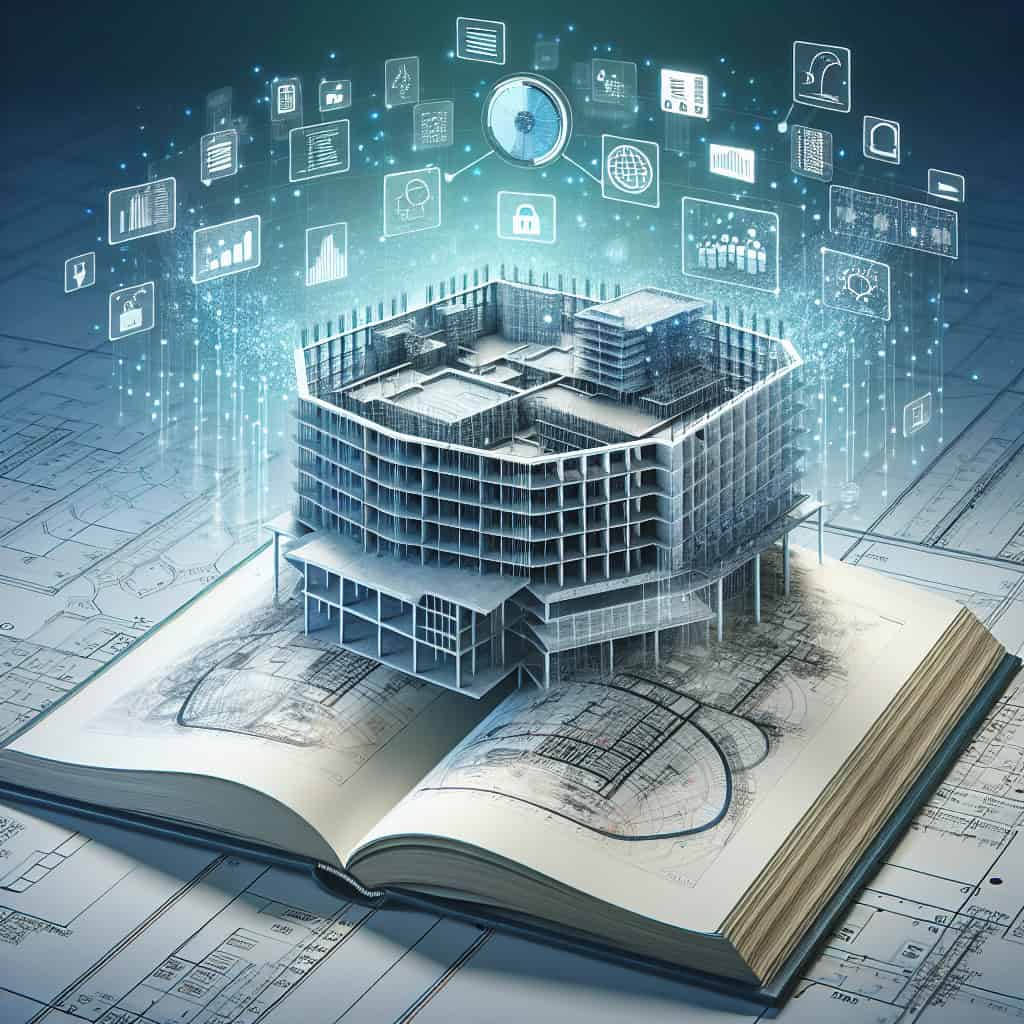
In the struggling construction industry, CDE systems (CDE: "common data environment") play a crucial role in the successful implementation of BIM projects. These software solutions not only enable data integration but also promote collaboration among various stakeholders in the construction sector. According to a study by McGraw Hill Construction, around 75% of construction companies reported that implementing a CDE in BIM improved their efficiency and productivity.
The benefits include:
- Efficient Planning: By centrally managing all project data, a CDE enables clear and structured planning, leading to fewer misunderstandings and errors.
- Collaboration: Different disciplines can work on a model in parallel, which significantly improves project communication.
- Data management in construction: The ability to store all relevant information in one place facilitates access to and use of data throughout a building's entire lifecycle.
A practical example is the use of cloud-based CDE solutions. These offer not only flexibility and mobility for project teams but also reduce the need for physical meetings. According to the Building Research Establishment (BRE) the use of digital tools like CDE can lead to construction projects being completed up to 30% faster.
In summary, CDE in BIM projects can not only increase efficiency but also revolutionize overall planning and construction coordination. So, if you are considering how to optimize your projects, you should seriously think about using a common data environment – your future construction sites will thank you!
What does Common Data Environment (CDE) mean?
A Common Data Environment (CDE) is more than just a software tool; it is the core for the successful implementation of BIM projects. As a common data environment for all project participants, a CDE offers a central platform where all relevant information and data can be stored, managed, and exchanged. This not only promotes collaboration between architects, engineers, and clients but also ensures that every participant always has the latest information. According to a study by the National Institute of Standards and Technology (NIST), the use of a CDE can reduce information loss by up to 35%. [1]
Here are some of the key functions of a CDE:
- Central Access: All project participants have access to current documents and models at all times, minimizing misunderstandings and delays.
- Versioning: Version management ensures that all stakeholders work with the same, up-to-date data. This keeps everyone in the loop.
- Security Features: A CDE offers robust security measures to ensure that sensitive data is protected from unauthorized access.
Let's take the example of a large construction project: a CDE allows all teams – from design to execution – to work on a model in real-time. This type of collaboration can not only reduce errors but also help save costs. A study by Building Smart International has shown that projects with a well-implemented CDE could reduce their costs by an average of 15%. [2]
"A CDE is not just a technical solution; it is the key to transforming how we work in construction."
So, if you are looking for ways to optimize your projects and improve collaboration, implementing a CDE is a crucial step into the future of digital construction.
The importance of CDE in BIM processes
The importance of CDE in BIM processes cannot be overstated. In the modern construction industry, they are not just a tool but the backbone for sustainable and efficient project execution. CDE systems enable structured data management that seamlessly connects all project participants. According to a study by the National Institute of Standards and Technology (NIST), a well-implemented CDE can reduce information loss by up to 35% [3]. This is particularly relevant when considering that incorrect information often leads to costly delays.
Here are some of the essential benefits of a CDE in BIM processes:
- Optimized Communication: By centrally storing all relevant data, it is ensured that every actor involved in the project is always up to date.
- Increased Efficiency: The ability to edit models simultaneously saves teams time and allows them to react faster to changes. This is particularly important in a field where time is often money.
- Better traceability: With CDE systems, every change is documented, so it can be traced who edited what information and when. This creates trust and clarity within the team.
A practical example is the use of cloud-based CDE solutions in large construction projects. These systems offer flexibility and enable teams to collaborate from different locations. According to an analysis by the Building Research Establishment (BRE), digital tools like CDE can complete projects up to 30% faster. [4]. If that's not impressive!
CDEs in BIM processes not only revolutionize the way we build; they also create a culture of collaboration and continuous learning in construction. Given all these benefits, you should seriously consider how a common data environment could optimize your projects – your future construction sites will thank you!
Applications of CDE in architecture and engineering
In architecture and engineering, the applications of CDE in BIM (Building Information Modeling) projects are as diverse as they are impressive. These tools not only revolutionize the way we build, but also how we collaborate. A well-implemented CDE allows architects, engineers, and clients to develop and optimize their ideas in a shared space. As the saying goes, 'Collaboration is the key to success!'
The benefits of CDE in architecture and engineering are synonymous with efficiency and creativity:
- Real-time Collaboration: Thanks to cloud-based solutions, teams can work on projects simultaneously, regardless of their location. This not only reduces delays but also fosters spontaneous creative ideas.
- Improved Visualization: By centrally storing all data, all stakeholders can access up-to-date models and visualize them in real-time. This makes every planning process more transparent—almost as clear as a freshly cleaned window!
- Data Integration: CDEs enable efficient integration of various data sources, which is particularly important when multiple disciplines have to collaborate. According to a study by the National Institute of Standards and Technology (NIST), the use of a CDE can reduce information loss by up to 35%. [5].
A practical example of CDE application in architecture is the planning of multi-story residential buildings. Here, architects and engineers use a CDE to centrally manage all structural and building services data. This approach allows for precise coordination between the different trades, thus avoiding costly errors during the construction phase.
'Using a CDE is comparable to using a compass in unknown terrain – it shows us the right way.'
In summary, CDEs in architecture and engineering not only contribute to process optimization but also foster a culture of mutual learning and sharing. So, if you're thinking about how to take your projects to the next level, rest assured: implementing a common data environment might be exactly what you need :-)
Cloud-based CDE solutions for optimized construction workflows
Cloud-based CDE solutions are like the secret magic potion for optimized construction processes. They not only offer flexibility and mobility but also revolutionize the way project teams collaborate. Imagine being able to work on a construction project with your team from your favorite café without ever closing your laptop! According to a McKinsey study, the implementation of digital tools can increase productivity in construction by up to 50%. [6].
Here are some of the key benefits of cloud-based CDE solutions:
- Flexibility: Projects can be updated in real-time, no matter where the stakeholders are located. An advantage that no one should miss out on—especially when it comes to important changes!
- Cost-effectiveness: By eliminating physical meetings and travel, companies save time and money. According to the Building Research Establishment (BRE), projects can be completed up to 30% faster with digital solutions. [7].
- Improved Communication: Information is stored centrally, allowing all stakeholders to access the latest data immediately.
Let's take a large infrastructure project as an example: when all teams are connected via a cloud-based CDE, they can collaborate seamlessly. This collaboration is crucial for the success of a project. A survey by Dodge Data & Analytics found that 80% of respondents reported that using digital tools significantly improved their efficiency. [8].
'A common data environment is not just a tool; it is the key to improving our collaboration in construction.'
In conclusion, cloud-based CDE solutions not only unleash construction magic but can also significantly contribute to optimizing planning and execution. So, if you aim to optimize your construction processes while keeping your project team happy, these systems are exactly what you need – after all, we should all save some time for the really important things in life (like the next coffee break?).
BIM standards and guidelines for supporting CDEs
BIM standards and guidelines play a crucial role in supporting Common Data Environments (CDEs) in Building Information Modeling (BIM). These standards ensure that all project participants follow the same rules of engagement, thereby guaranteeing data quality and consistency. A well-known example is the ISO 19650 standard, which provides a framework for managing BIM projects. According to a McKinsey survey, 75% of companies that have implemented BIM standards consider improved project management efficiency to be possible. [9].
Here are some key aspects of how BIM standards support CDEs:
- Uniform data formats: Standards define clear specifications for data formats, which facilitates exchange between different software solutions. This way, all stakeholders can ensure they are working with the same information.
- Transparent Processes: Standardizing workflows promotes transparent communication.
- Quality assurance: By specifying particular quality criteria, it is ensured that the data created is precise and reliable. This minimizes the risk of costly errors during the construction process.
Let's take a practical example: in a large infrastructure project, various teams – from engineers to contractors – could use unified CDE systems to exchange their information according to established BIM standards. According to a study by the National Institute of Standards and Technology (NIST), this can reduce information loss by up to 35%. [10]This improvement is not only a win for efficiency but also a step towards more sustainable construction practices.
"Adherence to BIM standards is not just a matter of compliance; it is the key to creating a common language in construction."
BIM standards and guidelines are indispensable tools for supporting CDEs in digital construction projects. They not only promote collaboration among all stakeholders but also significantly contribute to quality assurance and increased efficiency. Therefore, if you are considering how to optimize your projects, you should definitely take a look at the current BIM standards.
Future perspectives: The development of BIM and CDE technologies
The future of CDE in BIM projects is promising and shaped by continuous technological developments. With ongoing digitalization and the emergence of smart technologies, the construction industry landscape will change drastically. It's like watching a new star in the sky – we know it's there, but the possibilities are endless!
A notable trend is the integration of artificial intelligence (AI) into CDE systems. AI can help identify patterns in project data and make predictions that significantly improve project management. According to a study by PwC , the use of AI in construction could increase efficiency by up to 20% while reducing costs.
- Intuitive user interfaces: The next generations of CDE systems are expected to be more user-friendly, allowing even less tech-savvy project participants to quickly access important information.
- Blockchain Technology: This technology is increasingly used to ensure data integrity. It could become an indispensable tool for guaranteeing transparent and traceable data exchange processes.
- Real-time data analysis: The ability to analyze data in real-time and make decisions immediately could be the key to avoiding costly delays and problems on construction sites.
A concrete example of innovative developments are cloud-based platforms that enable project teams to collaborate efficiently from anywhere. A survey by Construction Industry Institute revealed that companies using cloud-based solutions have seen productivity increases of up to 50% – a fact that cannot be ignored!
The development of CDE in BIM projects is not only driven by technological advancements; it also contributes to the establishment of new standards for collaboration and efficiency. So, if you are looking for ways to make your construction projects future-proof, you should take a look at these developments – because the future of digital construction has only just begun!
