
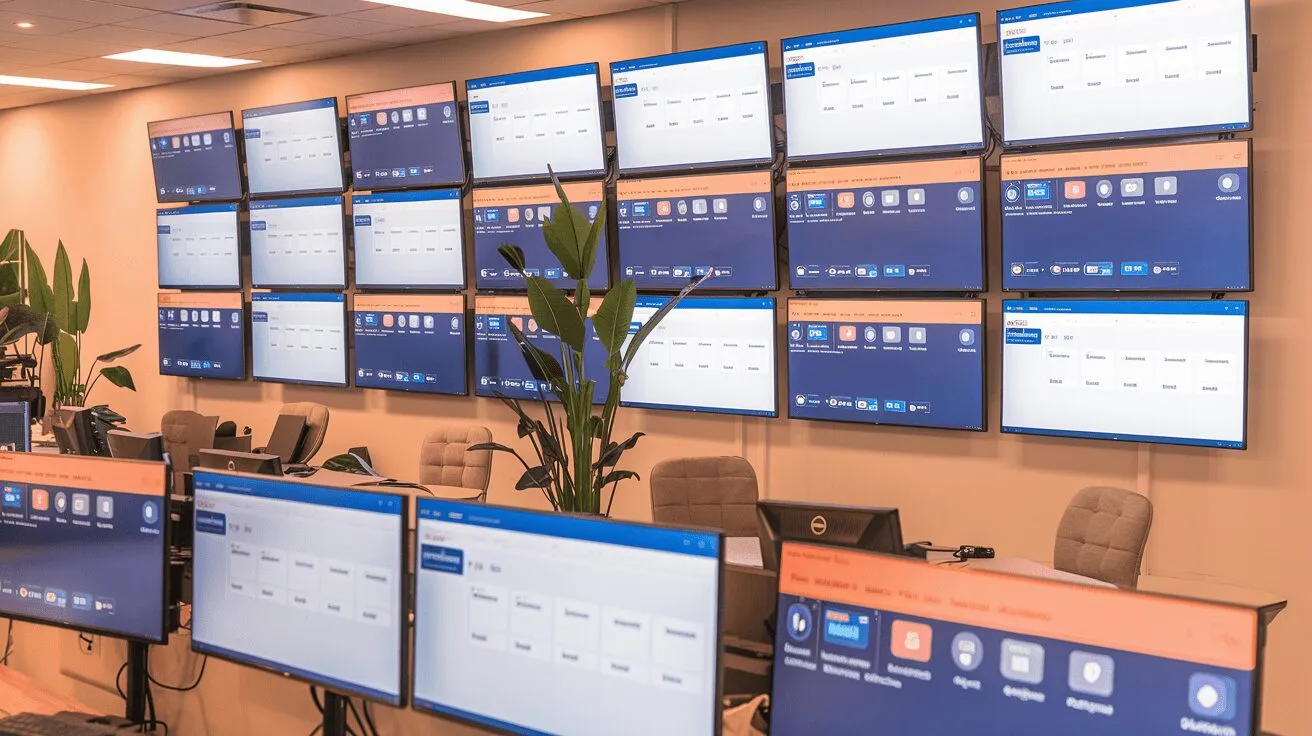
Digitalization has fundamentally changed the maintenance industry in recent years. A key aspect is the digital recording and management of all relevant data and information. This significantly increases the transparency and traceability of maintenance and repair work.
Digitalization also enables more efficient planning and control of maintenance processes, leading to improved asset availability and safety. The use of digital tools such as Computerized Maintenance Management Systems (CMMS) optimizes workflows and promotes more efficient resource utilization. Another significant advantage of digitalization in maintenance is the possibility of carrying out preventive maintenance measures.
Through continuous asset and machine monitoring, potential failures can be detected and rectified early before major damage occurs. This not only leads to higher asset availability but also to significant cost savings by avoiding expensive repairs. Furthermore, digitalization allows for better integration of IoT (Internet of Things) and Predictive Maintenance, contributing to further optimization of maintenance processes.
Correct determination of VAT liability
- Digitalization enables more efficient maintenance through the use of CMMS systems.
- By using CMMS systems, costs can be reduced and resources can be optimally utilized.
- Workflows and planning are improved through digitalization, leading to increased asset availability and safety.
- The integration of IoT and predictive maintenance enables proactive maintenance that minimizes failures.
- CMMS systems are the future of maintenance as they increase efficiency and enhance asset availability and safety.
Increased Efficiency through CMMS
Central recording and management
Through the central recording and management of maintenance plans, work orders, spare parts, and documentation, a significant increase in efficiency in maintenance is achieved.
Optimal resource planning
Furthermore, CMMS enables better planning and control of resources, leading to optimal utilization of employees and machines. Another advantage of CMMS is the ability to plan and carry out preventive maintenance measures.
Cost savings and integration of IoT
This not only leads to increased asset availability but also to significant cost savings, as expensive repairs can be avoided. Furthermore, CMMS allows for better integration of IoT (Internet of Things) and Predictive Maintenance, leading to further optimization of maintenance processes.
Cost Savings and Resource Optimization
Digitalization in maintenance leads to significant cost savings and resource optimization. Through the use of CMMS, maintenance processes can be controlled and planned more efficiently, leading to optimal utilization of employees and machines. Furthermore, preventive maintenance through continuous monitoring of assets and machines enables a reduction in expensive repairs and downtimes.
This leads to significant cost savings for companies. Another important aspect is the optimal use of spare parts and materials. Through central management of spare parts in a CMMS, inventory levels can be efficiently managed and planned.
This avoids overstocking or understocking of spare parts, leading to further cost savings. Furthermore, digitalization enables better planning of maintenance work, leading to optimal resource utilization.
Improvement of Workflows and Planning
| Metric | Value |
|---|---|
| Time savings | 20% |
| Productivity improvement | 15% |
| Reduction of Errors | 25% |
| Increasing Efficiency | 30% |
Digitalization in maintenance leads to a significant improvement in workflows and planning. Through the use of CMMS, work orders can be efficiently planned, coordinated, and documented. This leads to better organization of maintenance work and optimal utilization of employees.
Furthermore, digitalization enables better communication between different departments, leading to more efficient collaboration. Another important aspect is the ability to efficiently plan and control maintenance plans and intervals. Through continuous monitoring of assets and machines, preventive maintenance measures can be planned and carried out in a timely manner.
This leads to a significant improvement in asset availability and safety. Furthermore, digitalization allows for better integration of IoT (Internet of Things) and Predictive Maintenance, leading to further optimization of workflows and planning.
Increased Asset Availability and Safety
Digitalization in maintenance leads to a significant increase in asset availability and safety. Through the use of CMMS, preventive maintenance measures can be efficiently planned and carried out. This leads to a reduction in expensive repairs and downtimes, which significantly increases asset availability.
Furthermore, continuous monitoring of assets and machines enables early detection of potential failures, leading to increased asset safety. Another important aspect is the ability to efficiently plan and control maintenance plans and intervals. Through central management of maintenance plans in a CMMS, maintenance work can be optimally coordinated and carried out.
This leads to improved asset availability and safety. Furthermore, digitalization enables better integration of IoT (Internet of Things) and Predictive Maintenance, leading to further optimization of asset availability and safety.
Integration of IoT and Predictive Maintenance
Benefits of continuous monitoring
Through continuous monitoring of assets and machines using IoT sensors, relevant data can be captured and analyzed in real-time. This allows for early detection of potential failures, leading to improved asset availability and safety.
Preventive planning of maintenance measures
In addition, the integration of Predictive Maintenance allows for preventive planning of maintenance measures, avoiding costly repairs. Another important aspect is the ability to analyze and link data from various sources.
Continuous optimization of maintenance processes
Through the integration of IoT and Predictive Maintenance, extensive data analyses can be performed to identify patterns and trends. This enables continuous optimization of maintenance processes, leading to further increases in efficiency.
Conclusion: Why CMMS is the Future of Maintenance
In summary, digitalization in maintenance offers numerous advantages. The use of Computerized Maintenance Management Systems (CMMS) enables efficient management and control of all maintenance activities. This not only achieves a significant increase in efficiency but also improved planning, resource optimization, cost savings, workflows, and asset availability and safety.
The integration of IoT (Internet of Things) and Predictive Maintenance plays a crucial role in capturing relevant data in real-time, detecting potential failures early, and carrying out preventive maintenance measures. This leads to continuous optimization of maintenance processes. Overall, it can be stated that CMMS is the future of maintenance and companies that rely on these digital solutions will remain competitive in the long term.
