Artificial Intelligence

CAFM-Blog.de | The Future with Edge Computing

The Future with Edge Computing

Edge computing is an information technology concept that moves data processing and analysis closer to the point where data is generated. Instead of sending data to remote data centers, processing occurs directly at the network's edge, close to end devices or sensors. This enables faster data processing and reduces the volume of data that needs to be transmitted. This technology is particularly important in areas requiring real-time processing and low latency, such as Industry 4.0, the Internet of Things [...].

The Future with Edge Computing Read more »

CAFM-Blog.de | Sustainable Corporate Goals: ESG in Focus

Sustainable Corporate Goals: ESG in Focus

ESG stands for Environmental, Social, and Governance and refers to the three central areas of sustainability in companies. These factors play a crucial role in the development and implementation of sustainable corporate goals. Companies that consider ESG criteria integrate ecological and social aspects into their business strategy and focus on responsible corporate governance. This enables them to create long-term value, minimize risks, and improve stakeholder relationships. ESG criteria serve as a framework for

Sustainable Corporate Goals: ESG in Focus Read more »

CAFM-Blog.de | The Power of Big Data: How Data Shapes the Future

The Power of Big Data: How Data Shapes the Future

Big Data refers to the processing and analysis of data volumes that cannot be managed by conventional data processing methods due to their size, complexity, and growth rate. This data comes from various sources such as social media, business transactions, the Internet of Things (IoT), and industrial systems. Big Data is often characterized by the "3 Vs": Volume (data quantity), Velocity (speed of data generation and processing), and Variety (diversity of data formats). The analysis of Big Data enables companies

The Power of Big Data: How Data Shapes the Future Read more »

CAFM-Blog.de | Hyper-automation for FM Service Providers

Hyper-automation for FM service providers

Hyper-automation is a significant concept in Facility Management (FM) that has gained increasing relevance in recent years. This concept aims to optimize processes, reduce costs, and increase efficiency. By using hyper-automation, FM service providers can automate recurring tasks and deploy their resources more effectively. The implementation of hyper-automation enables FM companies to react faster to changing requirements and improve service quality for customers.

Hyper-automation for FM service providers Read more »

CAFM-Blog.de | Amazon AWS, Azure and Oracle: Cloud and Data Services

Amazon AWS, Azure, and Oracle: Cloud and Data Services

Amazon Web Services (AWS) is a leading cloud platform that offers a wide range of services. These include computing, databases, storage, and content delivery. AWS enables companies to move their IT infrastructure to the cloud and benefit from scalability, flexibility, and cost efficiency. The platform is used by companies of various sizes and industries. AWS offers numerous services that allow companies to run applications and workloads in the cloud without having to worry about the

Amazon AWS, Azure, and Oracle: Cloud and Data Services Read more »

CAFM-Blog.de | Efficient Property Management with CAFM Software

Efficient Property Management with CAFM Software

CAFM software (Computer Aided Facility Management) is a specialized software solution for the efficient management of properties and buildings. It provides facility managers with a comprehensive platform for organizing and optimizing all building-related processes. The main functions of CAFM software include: 1. Maintenance management 2. Maintenance planning 3. Space planning and management 4. Resource management 5. Energy management 6. Contract management 7. Budgeting and cost control CAFM software centralizes all relevant building data and information, leading to improved overview and more efficient decision-making.

Efficient Property Management with CAFM Software Read more »

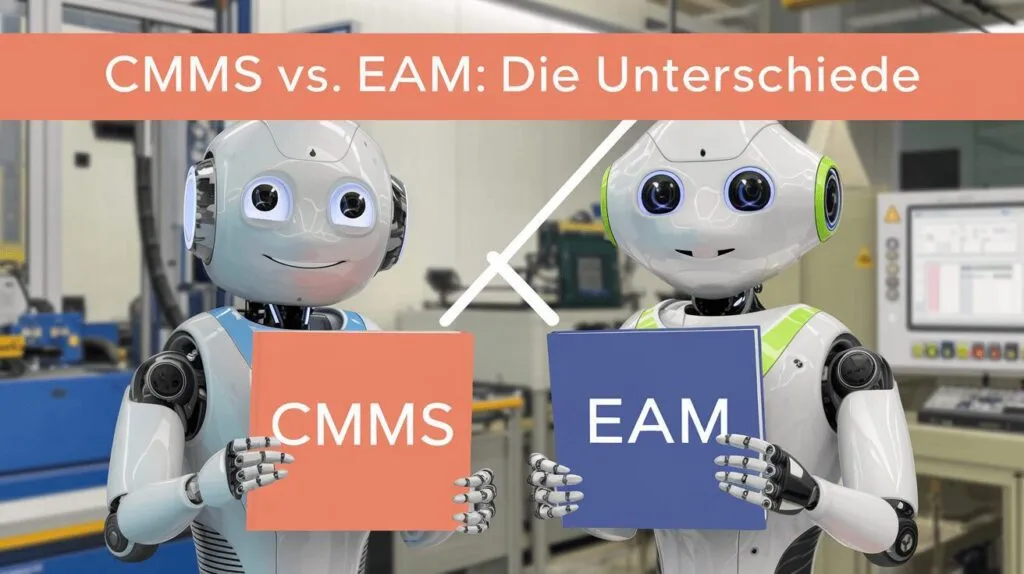
CAFM-Blog.de | CMMS vs. EAM: The Differences

CMMS vs. EAM: The Differences

Software integration is a central aspect of modern information technology. It enables seamless interaction between different applications and systems. Through integration, companies can increase their efficiency and productivity by optimizing the exchange of data and processes between different systems. A significant advantage of software integration is the ability to improve existing systems and introduce new technologies without having to completely redesign the IT infrastructure. This makes

CMMS vs. EAM: The Differences Read more »

CAFM-Blog.de | Efficient Property Management with CAFM Software

Future Developments in the CAFM Sector

Computer Aided Facility Management (CAFM) refers to the use of information technology for the efficient management of real estate and facilities. CAFM systems integrate various functions such as space planning, maintenance management, energy management, environmental and sustainability management, as well as the integration of IoT devices and artificial intelligence. These systems process and analyze large amounts of data to enable informed decisions and increase the efficiency of real estate and facilities. In recent years, the implementation of CAFM systems has increased significantly as companies

Future Developments in the CAFM Sector Read more »

CAFM-Blog.de | Digital Transformation in Facility Management

Digital Transformation in Facility Management

Digital transformation has had a profound impact on all economic sectors in recent years, including facility management. The integration of digital technologies in this area enables companies to optimize their operational processes, achieve cost savings, and increase efficiency. By using IoT devices, big data analytics, artificial intelligence, and automated processes, facility managers can capture and analyze real-time data to make informed decisions and improve the performance of their facilities. Digital transformation promotes

Digital Transformation in Facility Management Read more »

CAFM-Blog.de | What are the challenges of maintaining buildings and facilities?

What are the challenges of maintaining buildings and facilities?

The maintenance of buildings and facilities is an essential part of facility management. It includes all technical, administrative, and organizational measures to maintain or restore the functional condition of real estate and technical facilities. The main tasks include preventive maintenance, inspection, repair, and improvement. The importance of maintenance extends to various sectors such as industry, commerce, and public institutions. It significantly contributes to value preservation, operational safety, and energy efficiency. Modern maintenance concepts consider

What are the challenges of maintaining buildings and facilities? Read more »

CAFM-Blog.de | What Are Containers in Software Development?

The Future of Low-Code/No-Code Platforms

Low-code/no-code platforms are innovative development environments that enable the creation of applications without extensive programming knowledge. These platforms use visual development tools and pre-built components to simplify and accelerate the development process. Low-code platforms automatically generate a large part of the code, while no-code platforms can be used entirely without manual programming. Users can create complex applications using intuitive drag-and-drop functions and modular building blocks. The use of low-code/no-code platforms has increased significantly in recent years. They offer companies the opportunity to

The Future of Low-Code/No-Code Platforms Read more »

CAFM-Blog.de | The Future of Municipal Operations: Digitalization and AI in Finance

The Future of Municipal Utilities: Digitalization and AI in Finance

Digitalization has played an increasing role in the financial management of municipal companies in recent years. The use of digital technologies can optimize processes, reduce costs, and increase transparency. The automation of financial processes enables municipal utilities to use their resources more efficiently while minimizing error rates. Additionally, digitalization opens up opportunities for innovative business models and services that benefit residents and local businesses. Another significant aspect

The Future of Municipal Utilities: Digitalization and AI in Finance Read more »

CAFM-Blog.de | Optimization through condition-based maintenance

Optimization through condition-based maintenance

Condition-based maintenance (short: "CBM") has established itself in recent years as one of the most effective strategies for maintaining machinery and equipment. Unlike traditional time-based maintenance, where maintenance work is carried out at fixed intervals, CBM is based on the actual operational and condition data of the machines. This method allows companies to carry out maintenance measures specifically when it is actually necessary, leading to a significant reduction in

Optimization through condition-based maintenance Read more »

CAFM-Blog.de | CAFM Software: Digital Transformation in Building Management

Technologies for Hybrid Work Models

Hybrid work models have become increasingly important in the modern world of work. These models combine the structures of the traditional office workplace with the flexibility of home working. Employees can thus structure their working hours and location more flexibly, which potentially leads to an improved work-life balance. Another advantage is the possible reduction in traffic volume and the associated environmental impact due to reduced commuter traffic. For companies, hybrid work models offer the advantage of expanded access to talent

Technologies for Hybrid Work Models Read more »

CAFM-Blog.de | Importance of Computer Forensics

The Chief Privacy Officer: Protecting Privacy in the Company

The Chief Privacy Officer (CPO) is a key leadership position in companies responsible for data protection and security. The CPO's main responsibilities include: 1. Developing and implementing data protection policies 2. Ensuring compliance with applicable data protection laws 3. Promoting data protection awareness within the company 4. Training employees on data protection issues The CPO works cross-departmentally to integrate data protection aspects into all areas of the company. As the contact person for external data protection authorities, the

The Chief Privacy Officer: Protecting Privacy in the Company Read more »

Scroll to Top