
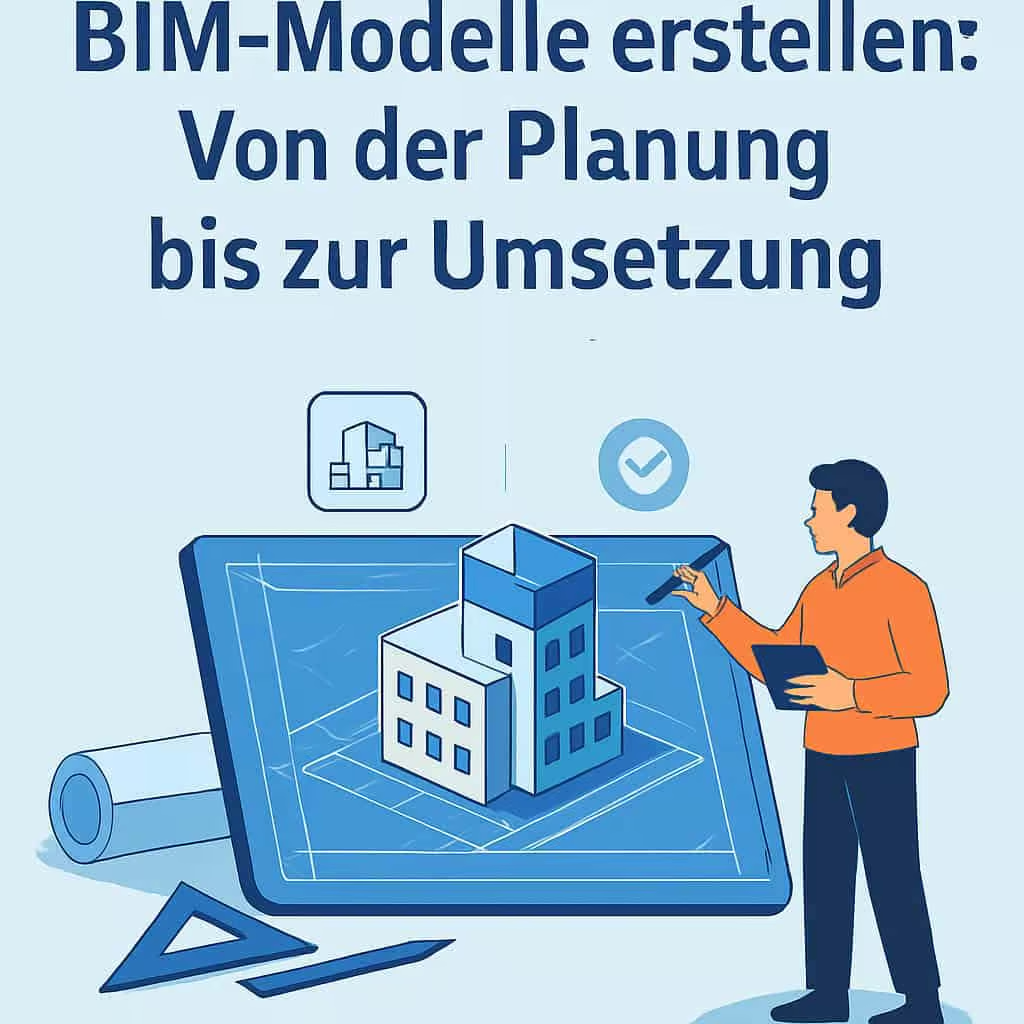
Building Information Modeling

CAFM-Blog.de | Creating BIM Models: From Planning to Implementation

Creating BIM Models: From Planning to Implementation

BIM modeling is like drawing a huge, detailed picture where every brushstroke is crucial. And the whole thing in multiple dimensions. And perhaps even with a timestamp :-) In any case, BIM tools enable architects, engineers, and clients to create a digital replica of a project that contains all the necessary information – from the planning phase to final implementation. So, what exactly is Building Information Modeling? You could say it's about [...]

Creating BIM Models: From Planning to Implementation Read more »

CAFM-Blog.de | BIM Models in Building Management: Benefits and Implementation

BIM Models in Building Management: Benefits and Implementation

When we talk about the future of building management, it's almost impossible to ignore the BIM model. Building Information Modeling is not just a buzzword, but a revolution in digital construction planning that fundamentally changes the way we design, build, and manage buildings. But what exactly is behind these three letters? BIM models are digital representations of the physical and functional characteristics of a structure. They combine geometric data with relevant information

BIM Models in Building Management: Benefits and Implementation Read more »

CAFM-Blog.de | BIM Models in Practice: How to Optimize Your Building Management

BIM Models in Practice: How to Optimize Your Building Management

In the European construction industry, BIM modeling is not just a trend, but a necessity. But what exactly is a BIM model? It is a digital representation of the physical and functional characteristics of a building, enabling all relevant data to be consolidated in an integrated platform. This Building Information Modeling revolutionizes the way we plan, build, and manage buildings. With the increasing complexity of construction projects, the importance of BIM software

BIM Models in Practice: How to Optimize Your Building Management Read more »

CAFM-Blog.de | Understanding the IFC Standard: Basics of digital building data transfer

Understanding the IFC Standard: Fundamentals of Digital Building Data Transfer

In the digital age, it is essential that all parties involved in construction have access to the same information and can collaborate effectively. This is where the IFC standard comes into play. This standard enables efficient and structured communication between different software solutions and professionals. Given the increasing complexity of construction projects and the growing importance of BIM (Building Information Modeling), understanding the IFC standard becomes a fundamental prerequisite for successful construction and Facility Management. The IFC standard, also known as

Understanding the IFC Standard: Fundamentals of Digital Building Data Transfer Read more »

CAFM-Blog.de | BIM Viewers Compared: The Best Tools for Building Visualization

BIM Viewers Compared: The Best Tools for Building Visualization

In the digital age, the efficient representation and management of building data has become an essential part of Facility Management practice. With the increasing complexity of construction projects, Building Information Modeling (BIM) plays a central role in visualization and planning. In this article, we compare different BIM viewers to introduce you to the best tools for building visualization. What is a BIM viewer? In the world of Building Information Modeling (BIM), the question often arises

BIM Viewers Compared: The Best Tools for Building Visualization Read more »

CAFM-Blog.de | Why the IFC Format is the Key to Sustainable Construction in 2025

Why the IFC Format is the Key to Sustainable Building in 2025

The IFC format (Industry Foundation Classes) has become an indispensable tool for design and execution in construction in recent years. This universal data format enables seamless interoperability between different software solutions in architecture, engineering, and facility management. According to a study by McKinsey, the use of Building Information Modeling (BIM), which is closely linked to the IFC standard, has the potential to reduce construction costs by up to 20% and

Why the IFC Format is the Key to Sustainable Building in 2025 Read more »

CAFM-Blog.de | Sustainable Building: LEED and BREEAM in Focus

Sustainable Building: LEED and BREEAM in Focus

Sustainable building is a concept that aims to minimize the environmental impact of construction projects while improving the quality of life for users. It encompasses a variety of aspects, including the selection of environmentally friendly materials, efficient use of energy and water, and the creation of healthy indoor environments. The basic principles of sustainable building are based on the idea that buildings are not just functional spaces, but also have a positive impact on the environment and

Sustainable Building: LEED and BREEAM in Focus Read more »

CAFM-Blog.de | Risk Management in Real Estate Development

Risk Management in Real Estate Development

Risk management plays a central role in real estate development, as it forms the basis for informed decisions and strategic planning. In a sector characterized by uncertainties and unpredictable market developments, a systematic approach to identifying, assessing, and managing risks is essential. Real estate developers face a variety of challenges, including economic fluctuations, regulatory changes, and technological innovations. Effective risk management enables developers to identify potential dangers early on.

Risk Management in Real Estate Development Read more »

CAFM-Blog.de | Efficient BIM Projects in Public Administration

Efficient BIM Projects in Public Administration

Building Information Modeling (BIM) has gained increasing importance in public administration in recent years. BIM is a digital method for integrated planning, execution, and management of buildings. In public administration, the efficient use of resources and the timely and budget-compliant execution of projects are of particular importance. BIM enables the integration of all relevant information of a construction project into a digital model, which facilitates collaboration among the involved parties.

Efficient BIM Projects in Public Administration Read more »
CAFM-Blog.de | Legal Aspects of BIM: What You Should Know

BIM Strategy for Public Administration: A Guide

The introduction of Building Information Modeling (BIM) in public administration is a crucial advancement for more efficient and sustainable planning of construction and infrastructure projects. BIM is a digital method for comprehensive capture, management, and exchange of all project-relevant information. This includes geometric data as well as information on materials, costs, and schedules. Due to their central role in the planning and implementation of infrastructure projects, it is essential for public administration to leverage the potential

BIM Strategy for Public Administration: A Guide Read more »
CAFM-Blog.de | Challenges in Implementing BIM in Administration

Challenges in introducing BIM in administration

The implementation of Building Information Modeling (BIM) in public administration presents a complex challenge that requires in-depth knowledge of the technology and its application possibilities. BIM is a digital representation of the physical and functional characteristics of a building. This method enables comprehensive planning, control, and management of construction projects throughout their entire lifecycle. In the context of public administration, this includes the phases of planning, construction, operation, and

Challenges in introducing BIM in administration Read more »

CAFM-Blog.de | The Costs of Not Using CAFM

Facility Management Tools: Efficient Management and Optimization

Facility management tools play a central role in modern corporate management. They enable efficient management and optimization of operational processes as well as improved resource utilization. These software solutions support facility managers in the comprehensive control of all aspects of building management, including maintenance, upkeep, space planning, and utilization. The use of facility management tools demonstrably leads to cost savings, productivity increases, and enhanced customer satisfaction. By integrating data collection and analysis functions, these tools enable informed decision-making processes.

Facility Management Tools: Efficient Management and Optimization Read more »
CAFM-Blog.de | BIM2FM: Information exchange along the building lifecycle

BIM2FM: Information Exchange Along the Building Lifecycle

Building Information Modeling to Facility Management (BIM2FM) is an advanced process for integrating building data throughout the entire lifecycle of a structure. This method optimizes the planning, construction, operation, and maintenance of buildings. BIM2FM enables the capture and management of all relevant building information in a digital model, leading to more efficient and cost-effective building management. The BIM2FM approach includes the capture and management of all building-related data and information. This includes geometric

BIM2FM: Information Exchange Along the Building Lifecycle Read more »

CAFM-Blog.de | Assessing BIM Maturity in FM Organizations

Assessing BIM Maturity Level in FM Organizations

The BIM maturity level is a central concept in Facility Management (FM) and describes an organization's ability to effectively implement and utilize Building Information Modeling (BIM). BIM is a digital process for creating and managing construction projects. The maturity level encompasses various stages that map an organization's progress in BIM usage from the initial phase to full integration into all business processes. Assessing the BIM maturity level is of great importance for FM organizations.

Assessing BIM Maturity Level in FM Organizations Read more »

CAFM-Blog.de | Relevant Technologies and Applications of BIM: An Overview

Relevant Technologies and Applications of BIM: An Overview

Building Information Modeling (BIM) is an innovative method for the digital representation and management of construction projects. It is a three-dimensional, data-rich model that captures all relevant information of a building or infrastructure throughout its entire lifecycle. BIM integrates geometric, technical, functional, and economic data into a single digital model. The application of BIM enables improved collaboration among all project stakeholders, including architects, engineers, contractors, and facility managers. Through

Relevant Technologies and Applications of BIM: An Overview Read more »

Scroll to Top