
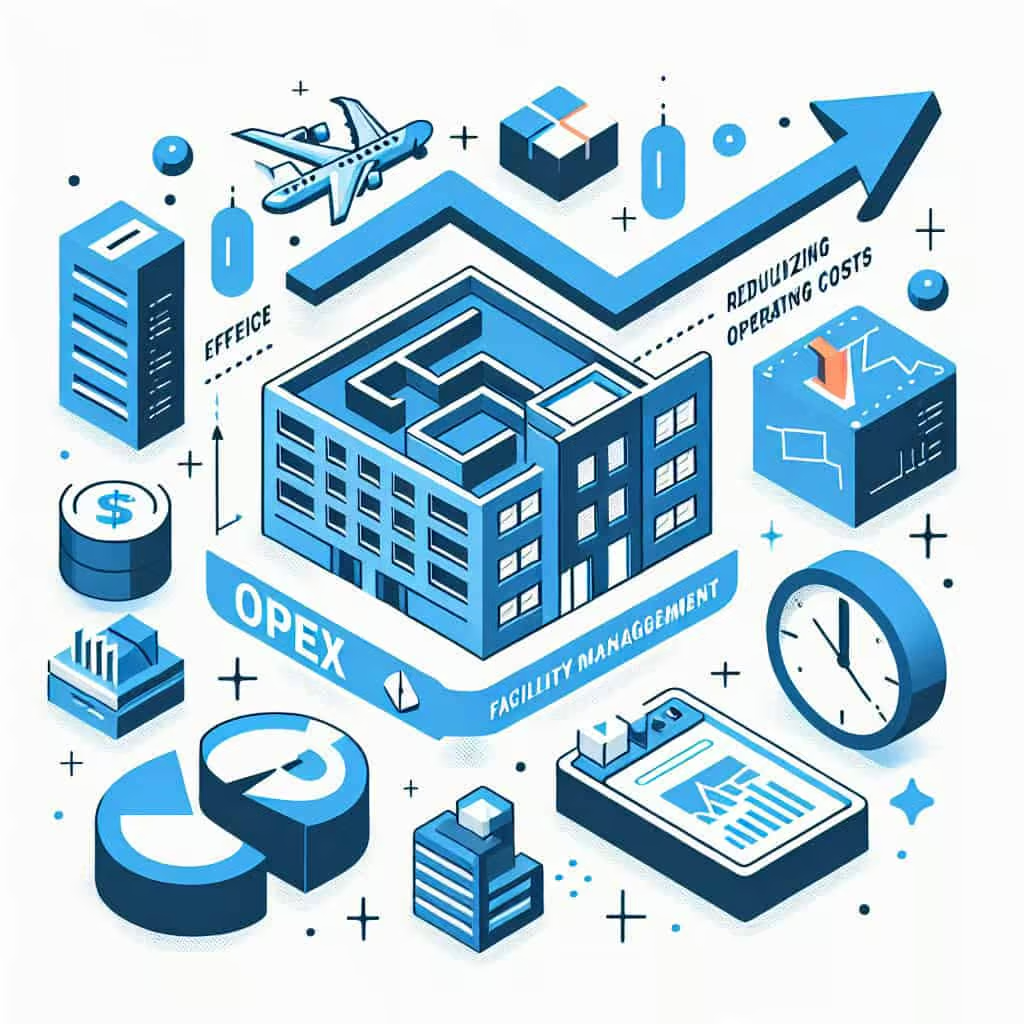
Optimizing operating costs, also known as OPEX (operating expenses), plays a crucial role in facility management. In times of rising energy prices and increasing demands for operational efficiency, it is essential to develop a clear strategy for reducing ongoing costs. Companies face the challenge of minimizing their operating expenses without compromising the quality of their services or products.
The question is therefore: How can OPEX be optimized smartly? A first step is to analyze the various components of operating expenses This includes not only direct costs for personnel and materials, but also indirect expenses such as maintenance costs and energy cost management. Here are some effective strategies for reducing operating costs:
- Increasing efficiency through digitalization: By using modern CAFM software (Computer-Aided Facility Management), processes can be automated and resources managed more efficiently.
- Outsourcing of operational tasks: Activities such as cleaning or maintenance can often be outsourced to external service providers more cost-effectively.
- Cost-conscious energy management: The implementation of energy-efficient systems can significantly reduce energy costs while protecting the environment.
Also important is OPEX Benchmarking, where companies compare their expenses with those of the industry to identify potential for improvement. These insights not only help reduce costs but also promote sustainable operational efficiency. And remember: optimized expense management is not a one-time project, but a continuous process.
Ultimately, reducing operating costs requires holistic thinking and strategic planning. But with the right tools and a clear focus on cost reduction, companies in Germany can not only lower their operating expenses but also become more competitive in the long term. So buckle up – the path to OPEX optimization may be bumpy, but it leads to a profitability analysis of operational expenses that is truly worthwhile!
Understanding OPEX in Facility Management
To properly understand OPEX in facility management, it is important to shed light on the definition and underlying concepts. OPEX, or operating expenses, include all ongoing costs incurred in the operation of a company. These are not only the obvious expenses such as salaries and material costs, but also less visible items such as maintenance and energy costs. This comprehensive view helps companies to efficiently analyze their operating expenses and take targeted measures for cost reduction.
The Dimensions of OPEX
OPEX can be divided into different categories:
- Fixed costs: These include rents, leases, or salaries that are incurred regardless of the production volume.
- Variable costs: These change with the production volume. An example of this is raw materials or other materials.
- Maintenance costs: Regular maintenance and repair work are essential for operation. Preventive maintenance plays an important role here in avoiding failures and saving costs in the long term.
- Energy costs: These represent a large portion of operating costs and can be optimized through targeted energy management.
A deep understanding of these dimensions enables facility managers to make smarter decisions regarding the Expense Management to make.
Cost Center Analysis as the Key to OPEX Optimization
One of the most effective approaches to optimizing operational expenses is to conduct a detailed cost center analysis. This involves a thorough examination of all areas of the company – from purchasing and production to sales. Identifying areas with high operating expenses can help recognize potential for improvement. The analysis can be divided into several steps:
- Gather data: Record all relevant cost data over a specific period.
- Analyze data: Identify trends or anomalies in operating costs.
- Reduce costs: Develop strategies to reduce unnecessary expenses.
Let's take energy cost management as an example: By using energy-efficient devices and systems, a company can not only protect the environment but also achieve significant savings – up to 30% of energy costs are achievable here!
Conclusion
Ultimately, understanding OPEX in facility management requires a holistic view of operational processes. It is not enough to just look at the numbers; rather, strategies must be developed to actively influence these numbers. With a clear focus on increasing efficiency and a proactive stance towards one's own operating costs, companies can not only increase their profitability but also ensure sustainable growth. So, think outside the box: your next savings could be right in front of you!
Cost Reduction Through Efficiency-Enhancing Measures
To sustainably reduce operating costs, efficiency-enhancing measures are of central importance. In the world of facility management, targeted optimization can not only Operating Expenses reduce but also significantly increase operational efficiency. This is a dynamic process in which companies should regularly question their strategies and processes.
Automation as the Key to Efficiency
Today, digitalization offers numerous opportunities for automation and thus for increasing efficiency. The use of CAFM Software enables a high degree of transparency across all operational processes. Processes that were previously manual and time-consuming can be automated. Here are some advantages:
- Time Savings: Automated systems significantly reduce the time spent on administrative tasks.
- Cost reduction: Fewer human errors and optimized workflows lead to lower operating costs.
- Better data analysis: Real-time data enables immediate reaction to changes in operational processes.
Rethinking Energy Cost Management
Energy costs represent a significant portion of operational expenses. But did you know that intelligent systems for monitoring energy consumption can save up to 20% in costs? Here are some approaches:
- Energy-efficient devices: Investments in modern technology often pay off through reduced energy costs.
- Timers and sensors: These technologies ensure that devices only run when they are needed.
- Use of Renewable Energies: Solar or wind power can not only be environmentally friendly in the long term but also drastically reduce energy costs.
Promoting Collaboration and Utilizing Outsourcing
Often, outsourcing certain operational tasks can lead to a significant reduction in costs. While this may initially seem like an additional expense, external service providers are often more cost-effective due to specialized professionals and better resource management. Areas such as cleaning, maintenance, or IT support are particularly suitable for this. By outsourcing, companies can realize the following benefits:
- Cost savings: Fixed wages and social security contributions are often eliminated.
- Speed and flexibility: External service providers can often react more quickly to changes.
- Leverage specialization: External providers bring expertise that may not be available internally.
Don't forget: Involve employees!
One of the most important elements in implementing efficient measures is involving employees. They often have the best ideas for improving processes and workflows. Training or workshops can help raise awareness of cost efficiency and establish a culture of savings within the company.
In summary: Reducing operating costs requires a holistic approach focused on increasing efficiency through modern technologies and smart personnel decisions. The path to OPEX optimization is challenging, but with the right strategies, your company can not only lower its operating costs but also increase its competitiveness – this is definitely something you should focus on!
Strategies for Optimizing Operating Expenses
Optimizing operational expenses, better known as OPEX management, is a central concern in facility management. It's not just about reducing costs, but also about increasing operational efficiency and flexibility. Well-thought-out strategies are essential to meet this goal.
Data-driven decision management
One of the most effective methods for optimizing OPEX is the use of data analysis. By employing modern technologies, companies can capture and evaluate important key figures:
- Transparent cost determination: Create a detailed overview of all operational expenses. Those who know where the money is going can intervene specifically.
- Forecasting Trends: Predictive analytics can be used to forecast future cost developments. This enables proactive measures instead of reactive adjustments.
- Optimizing Operational Processes: By analyzing business processes, bottlenecks can be identified and resolved – often with minimal effort.
Efficient resource management
Another key to reducing operating costs lies in the efficient use of resources. Companies should consider the following aspects:
- Promoting Employee Competencies: Training and further education help employees to expand their skills and work more efficiently.
- Sharing Resources: Consider whether certain departments can share resources (e.g., equipment or software) to save costs.
Use of sustainable practices
Not only for ecological reasons, but also economically sensible: Sustainability can bring significant savings in ongoing costs. Energy-saving technologies, such as LED lighting or intelligent heating systems, not only significantly reduce energy costs but also contribute to the company's positive image.
Collaboration through outsourcing
Undoubtedly, outsourcing certain operational processes can be a strategic means of OPEX optimization. The advantages are obvious:
- Cost reduction: External service providers are often more cost-effective than internal solutions due to their specialization.
- Access to Expert Knowledge: Access to skilled professionals can increase the quality of services while simultaneously reducing operating costs.
Create a culture of continuous improvement
Ultimately, it is crucial to establish a corporate culture in which continuous improvement and efficiency increases are seen as a shared responsibility. Regular training and workshops promote this awareness and motivate employees to actively contribute suggestions for cost reduction.
Because remember: The best ideas for reducing your operating costs could be right under your roof! By fostering an open communication culture and involving your employees, you not only create innovative solutions for optimizing your expenses but also strengthen the sense of belonging within the team – in the spirit of: Together we are strong!
Importance of Effective Budget Planning
Effective budget planning is the key to successfully optimizing OPEX in facility management. It serves not only as a financial roadmap but also as a strategic tool for better managing and controlling operational expenses. In a dynamic business environment where cost structures are constantly changing, forward-looking budget planning is essential.
The foundation of solid budget planning
Budget planning should be based on a thorough analysis of previous operating expenses. To achieve this, the following steps are crucial:
- Data Analysis: Collect and analyze historical data about your operating expenses. This allows patterns to be recognized and future costs to be better predicted.
- Categorization: Divide your expenses into fixed and variable costs. This helps you identify the areas with the greatest potential for savings.
- Create forecasts: Use modern analysis tools to develop realistic forecasts for future expenses. This allows unexpected cost traps to be identified early on.
Operational flexibility through adaptive planning
Another crucial aspect of budget planning is flexibility. In a world where market conditions can change rapidly, your budget must be adaptable. Here are some strategies:
- Dynamic adjustments: Regularly review the budget status and adjust it as needed. This ensures that your company always stays up-to-date.
- Scenario planning: Develop different scenarios (best-case and worst-case) and plan corresponding measures. This gives you security in unpredictable situations.
Cost control and monitoring
A well-planned budget is only as good as its implementation. Therefore, effective monitoring is essential.
- Regular Review: Set fixed intervals for budget review to ensure all departments operate within their financial limits.
- Real-time data analysis: Use software solutions for real-time analysis of your expenses. This allows deviations to be identified and corrected immediately.
Involve employees – the secret weapon for successful budget management
Last but not least, your employees should be involved in the budget planning process. After all, they are the experts in their respective areas! Regular meetings or workshops can achieve the following benefits:
- Creative ideas for cost reduction: Employees often have valuable insights into where savings are possible.
- Increased budget utilization: When employees understand why certain decisions are made, they are more willing to support and actively implement them.
In summary: Effective budget planning is the backbone of successful OPEX management in facility management. By creating a solid foundation, enabling flexibility, and focusing on transparency, your company can not only reduce operating costs,but also increase its operational efficiency. So take the reins – your next big savings could be closer than you think!
The Impact of Digitalization on OPEX Reduction
Digitalization has brought about a profound change in how companies manage their operational expenses (OPEX) in recent years. This shift is particularly evident in Facility Management, as modern technologies can not only increase efficiency but also significantly reduce operating costs. But how exactly does digitalization influence OPEX reduction?
Automation of processes
A key advantage of digitalization is the possibility of automating routine tasks. Instead of manually capturing data or controlling processes, companies can implement software solutions that efficiently take over these tasks. This has several positive effects:
- Time Savings: Automated systems minimize the time spent on administrative activities.
- Cost reduction: Fewer manual interventions mean lower error rates and associated costs.
- Better resource allocation: Employees can concentrate on value-adding activities instead of being occupied with monotonous tasks.
Data analysis for informed decisions
Another significant aspect of digitalization is the collection and analysis of data. With the help of modern technologies, companies can gain comprehensive insights into their operating costs. For example:
- Transparent cost determination: Specific analyses can reveal exactly where money is being spent and where potential savings lie.
- Forecasting Trends: Predictive analytics makes it possible to forecast future cost developments and take proactive measures.
- Optimizing Operational Processes: Data helps in identifying bottlenecks or inefficiencies in processes.
Energy cost management through intelligent systems
Energy costs are often a considerable item in operating expenses. Digitalization offers numerous opportunities for optimization here:
- Energy Monitoring Systems: Intelligent systems for continuous monitoring of energy consumption help to detect inefficient use early on.
- Use of Renewable Energies: Digital platforms support the integration of sustainable energy sources, which is not only ecologically sensible but also saves costs in the long run.
Collaboration through cloud solutions
Modern cloud-based solutions enable teams to collaborate more efficiently and exchange information in real-time. This has direct benefits for OPEX management:
- Faster Decision-Making: Teams can react faster and make adjustments through easy access to current data.
- Cost reduction through remote work: The possibility of home office not only reduces fixed costs such as rent but also promotes a flexible working environment.
Smart maintenance as a key to cost reduction
One of the best examples of digital innovation in Facility Management is the concept of smart maintenance. Instead of performing regular maintenance intervals regardless of the actual condition of a system, digital solutions enable predictive maintenance. This involves using sensors to monitor the condition of machines in real-time. This leads to a significant reduction in downtime and maintenance costs; studies show savings of up to 30%!
In summary, digitalization has the potential to drastically reduce OPEX while significantly increasing operational efficiency. If companies are willing to leave traditional methods behind and integrate modern technologies, many doors will open for them – including new opportunities to optimize their operating expenses and position themselves for the future in the competitive landscape.
So, embark on your digital journey – your next savings could be just a click away!
Conclusion: Sustainable Reduction of Operating Costs
In today's business world, sustainably reducing operating costs is not just a desire, but a necessity. Optimizing operational expenses (OPEX) can determine whether a company thrives or fades into insignificance. The art lies in implementing the right strategies while thinking long-term.
A central aspect is comprehensive Analysis of operating expenses. Companies should not only focus on short-term savings but also on how they can minimize their expenses in the long run. This includes:
- Cost-conscious energy management: An intelligent system for monitoring energy consumption can help to immediately detect inefficient use and take appropriate measures. This can reduce energy costs by up to 30%!
- Preventive maintenance: Through regular checks and the use of modern technologies, systems can be maintained in time before expensive failures occur.
- Data-driven expense management: The use of data analysis makes it possible to identify patterns in expenses and initiate targeted measures for cost reduction.
But how can these changes be achieved? Here are some effective strategies:
- Promote a culture of continuous improvement: By involving all employees in the process, they can contribute valuable ideas for cost reduction. Who could know better where savings are possible than the people who work with the processes every day?
- Use energy-efficient technologies: Investments in modern equipment often pay off – not only through lower energy costs but also through a better corporate image.
- Leverage Collaboration and Outsourcing: External service providers often bring specialized expertise and can work more cost-effectively than internal solutions.
Ultimately, it's about developing a strategy that considers both short-term and long-term benefits. Implementation requires commitment from all levels of the company – from management to every single employee.
[Your next big saving could be here!]
In summary: Sustainable reduction of operating costs is not a one-time project, but a continuous process. With a dynamic approach and the use of modern technologies, companies have the opportunity to sustainably optimize their OPEX and thus gain a competitive advantage. Let's tackle it together – your company will thank you for it!
