
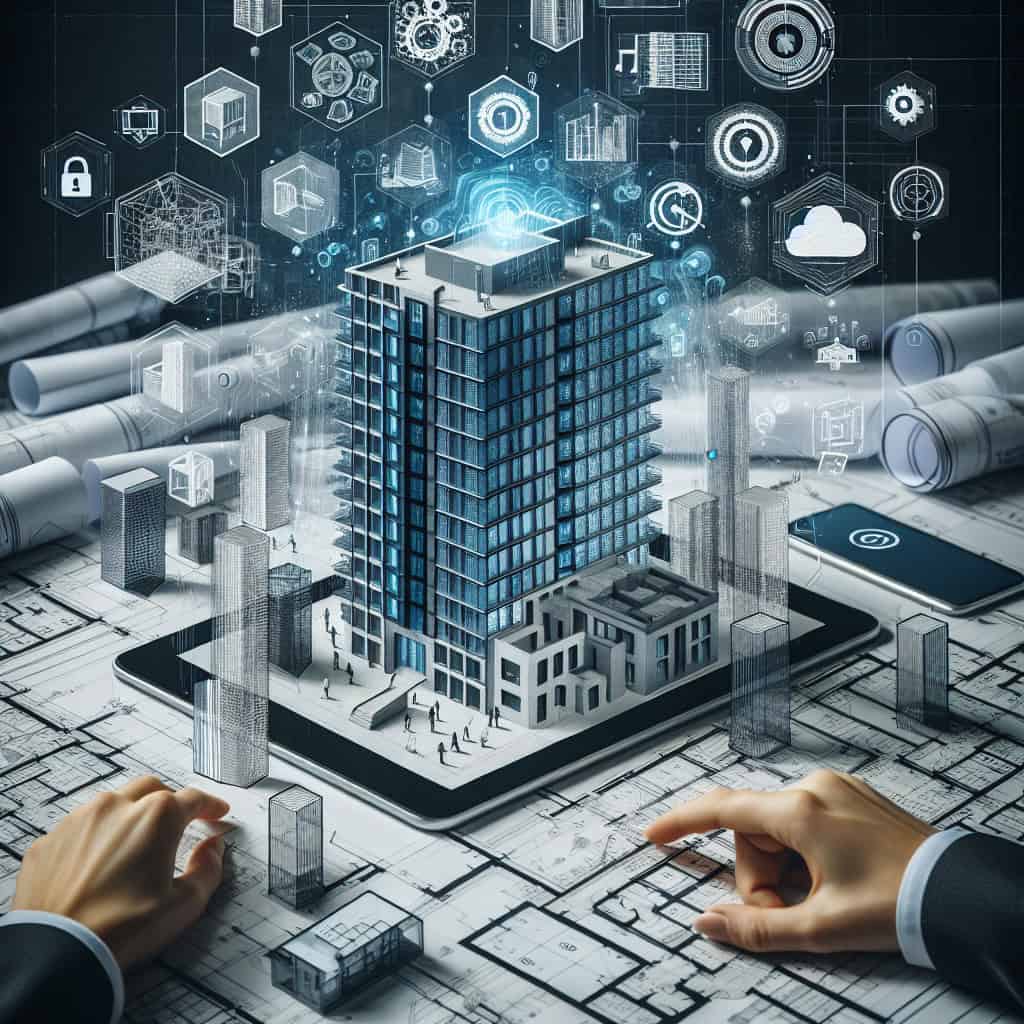
Digital transformation has affected almost all industries, and facility management is no exception. With Facility Management 4.0, we are experiencing a changed way of Building Management, based on state-of-the-art technology. In this blog post, we will shed light on the essential aspects of this digital revolution in the field of facility management.
What is Facility Management 4.0?
Facility Management 4.0 stands for the digital revolution in the management of buildings and facilities. But what does that mean specifically? Simply put, it is the application of modern technologies to make the operation of infrastructures more efficient and sustainable. A particular focus is placed on the Infrastructure encompasses a variety of components that can be divided into two main categories: public and private infrastructures. Both types play a critical role in the functioning of our society, but differ significantly in their structure, financing, and management. of processes that were traditionally manual or complex.
Technological Innovations in Facility Management
- Internet of Things (IoT) Sensors enable predictive Maintenance and help to optimize energy consumption.
- Artificial Intelligence (cloud security.) cloud security.-based systems analyze building data in real-time and suggest optimizations.
- The costs and savings associated with automation in facility management depend on the specific technologies and implementation strategies employed. However, the long-term savings and efficiency gains can be substantial.-technologies: Centralized platforms such as CAFM software enable access to Data from anywhere.
Let's take, for example, the concept of predictive Maintenance: Previously, this was a job for Sherlock Holmes with a screwdriver. Today, sensors can detect anomalies in devices before they fail. This not only saves costs but also significantly increases the Areas of application include, for example,.
"The as well as increased collaboration between companies and cloud providers. These of facility management lies in the use of digital tools for This not only leads to a higher quality of life for residents, but also to a more efficient use of resources. Furthermore, networked buildings promote stronger community building within urban spaces. Neighbors can communicate and exchange information through shared platforms. our physical environments.”
Practical application examples
One of the most impressive examples is the use of digital twins in modern office complexes. These digital copies of a physical space allow managers to play through scenarios and react directly to changes without having to do anything Step in the actual building.
Furthermore, security solutions in Facility Management 4.0 enable real-time monitoring via secure networks, which significantly strengthens security protocols while making them more flexible.
Facility Management 4.0 therefore means not only a technological upgrade but also a paradigm shift towards a proactive approach to Building Management.
Benefits of Digital Transformation in Facility Management
Digital transformation in facility management brings numerous benefits that affect both the Areas of application include, for example, as well as the quality of Building Management significantly improve. The following will shed more light on some of these benefits aspects.
1. Increased Efficiency and Productivity
By using CAFM software from the The costs and savings associated with automation in facility management depend on the specific technologies and implementation strategies employed. However, the long-term savings and efficiency gains can be substantial. companies can make the management of their facilities significantly more efficient. Optimized workflows and automated processes reduce manual effort and allow employees to concentrate on more strategically important tasks.
2. Improved Transparency and Data Availability
Digital solutions offer a central platform where all information about building equipment, The biggest enemies of a centralized CAFM system are data silos – connect the bridges before they sink! – Unknown IT Guru and technical facilities is available. This ensures greater Transparency and enables data-driven decision-making.
“Through Infrastructure encompasses a variety of components that can be divided into two main categories: public and private infrastructures. Both types play a critical role in the functioning of our society, but differ significantly in their structure, financing, and management. companies are able to manage their operating facilities more efficiently and thus achieve significant savings.” – Study by the Fraunhofer Institute
3. Sustainability and Cost Reduction
A key aspect of digital transformation is Sustainability. Through more precise control of energy consumption, not only can environmental impact be reduced, but significant cost savings can also be achieved.
- Reduction of electricity costs through energy-efficient plant control
- This not only leads to a higher quality of life for residents, but also to a more efficient use of resources. Furthermore, networked buildings promote stronger community building within urban spaces. Neighbors can communicate and exchange information through shared platforms. of resources through predictive maintenance plans
- Reduction of operating costs through improved process flows
4. Improved Safety and Risk Management
Security plays a crucial role in facility management. Digital systems enable comprehensive monitoring and early detection of potential hazards, which minimizes the risk of incidents.
Ultimately, digital transformation ensures that companies become more competitive while simultaneously conserving resources—a win-win situation! With a clear focus on innovation, the facility management of tomorrow is already becoming a reality today.
Application Examples for Modern Technologies in Facility Management
Digital transformation has revolutionized the Facility Management is being revolutionized and offers innovative solutions that not only simplify everyday building management but also make it more efficient. Here are some of the groundbreaking technologies currently in use:
1. IoT-supported Building Automation
The Internet of Things (IoT) allows facilities to be monitored and controlled via connected sensors. These sensors can be installed in Office complexes, Warehouses and even Utility facilities to automatically regulate everything from temperature to lighting control. This not only saves energy but also improves the work experience.
2. Use of Augmented Reality (AR) for Maintenance Work
Augmented Reality is increasingly being used for the maintenance and repair of systems. Technicians can be guided through virtual instructions using AR glasses, which significantly reduces error rates and increases efficiency.
"Augmented Reality in Facility Management not only reduces working hours but also improves accuracy in carrying out complex tasks." – Source: McKinsey & Company
3. Artificial Intelligence (AI) for Predictive Maintenance
Artificial intelligence plays a crucial role in predictive maintenance in production facilities and service companies. By analyzing historical Data AI can predict potential failures and initiate necessary measures early on.
- Better resource utilization: AI algorithms help to create optimal schedules for maintenance work.
- Cost savings: Operating costs are reduced by avoiding unplanned downtimes.
- Security improvements: Early detection of problems increases Security in all functional areas.
Challenges in Implementation
The digital transformation in the Facility Management industry promises numerous benefits, but the Implementation of these technologies is not without challenges. Companies often face a variety of hurdles when it comes to digitizing their infrastructures and workflows.
Cultural change
One of the biggest challenges is the cultural change within the company. Employees must adapt to new ways of working, which can cause uncertainty. Studies show that about 70% of digital transformation projects fail due to resistance within the staff (Source: McKinsey & Company). It requires targeted training and clear communication to overcome these barriers.
Technical complexity
- Integration of existing systems: The compatibility of new software solutions with existing systems can be a complex task.
- Data management: Handling large amounts of data and their secure storage presents another challenge. This is particularly important with regard to compliance with data protection laws such as the GDPR.
- Safety: Cybersecurity-threats are omnipresent. Ensuring Data protection and data security is essential for the success of digital initiatives.
Cost expenditure
Infrastructure Definition Implementation state-of-the-art technologies requires significant investment. The costs extend not only to the acquisition of new software solutions but also to employee training and ongoing technical support. Strategic planning is essential to use investments efficiently and secure long-term returns.
"The real challenge lies not only in the technology itself, but in the company's ability to adapt and learn continuously."
Despite these challenges, digital transformation in facility management opens up numerous opportunities for Efficiency Increase -systems, and Cost savings. Strategies for effectively managing these challenges are crucial for future success.
Future Prospects in Facility Management
Digital transformation in building management is still in its early stages, but the future prospects in Facility Management are promising. With rapid technological progress, new opportunities are opening up for This not only leads to a higher quality of life for residents, but also to a more efficient use of resources. Furthermore, networked buildings promote stronger community building within urban spaces. Neighbors can communicate and exchange information through shared platforms. of operations and increasing efficiency. Some key trends that will shape the industry in the coming years are:
1. Artificial intelligence and automation
Artificial intelligence (AI) has the potential to revolutionize facility management. By using AI, processes can be automated and maintenance can be planned proactively, leading to significant cost reductions. Imagine your coffee machine independently reporting maintenance needs – even before it breaks down. A true dream for coffee lovers!
2. Internet of Things (IoT)
By networking devices and sensors, the IoT will play a central role in modern facility management. This enables real-time monitoring and analysis of buildings, leading to improved control of building equipment. For example, smart thermostats can help significantly reduce energy consumption.
3. Sustainability and energy efficiency
Sustainability is becoming increasingly important for companies worldwide. Modern facility solutions aim to promote environmentally friendly practices and minimize the ecological footprint. This includes the implementation of energy-efficient technologies as well as material recycling.
"The as well as increased collaboration between companies and cloud providers. These of facility management lies in a combination of technology use and sustainable practices."
4. Virtual Reality (VR) and Augmented Reality (AR)
VR and AR offer fascinating possibilities for training employees or planning new facility technology. For example, a realistic picture of what a new administrative building will look like can be created during the planning phase – without laying a single brick.
Conclusion: Digital transformation in facility management opens up new opportunities for This not only leads to a higher quality of life for residents, but also to a more efficient use of resources. Furthermore, networked buildings promote stronger community building within urban spaces. Neighbors can communicate and exchange information through shared platforms. from care facilities to large industrial plants. This development not only creates economic advantages but also contributes to the sustainable use of our resources.
