
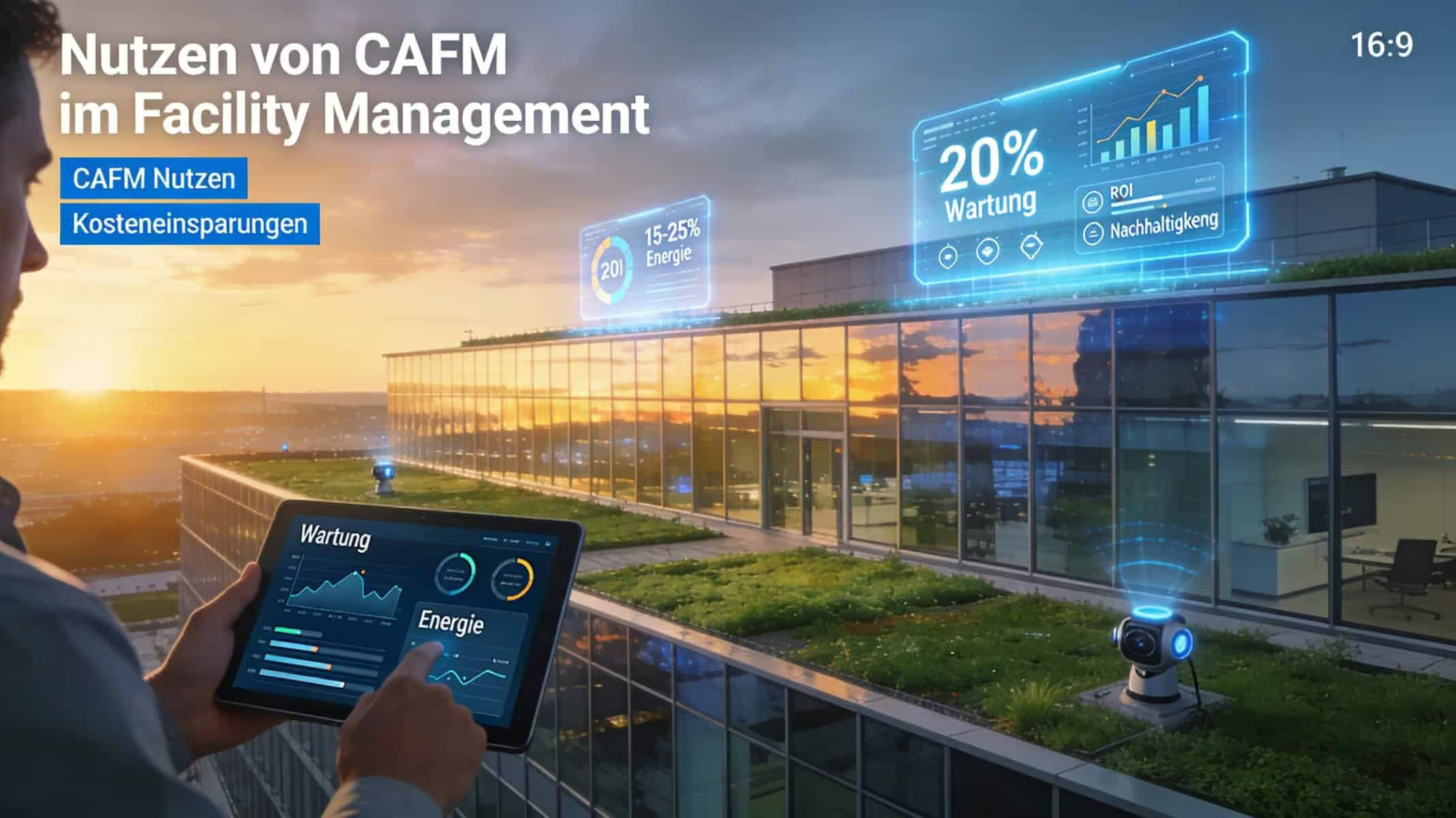
Computer-Aided Facility Management (CAFM) is a digital solution for managing buildings, facilities, and resources. It centralizes data on maintenance, spaces, and costs on one platform. Unlike Excel or paper, CAFM offers real-time analysis and automation that increase efficiency. It is indispensable, especially in the DACH region with strict standards like GEFMA. The application is worthwhile due to a measurable ROI within 2-3 years.singu]
Increased Efficiency Through Automation
CAFM automates routine tasks such as maintenance schedules and order assignment, which saves time. Facility managers reduce manual effort by up to 40%. Mobile apps enable on-site inspections with photo documentation and automatic forwarding. This minimizes errors and speeds up responses. Example: In case of malfunctions like leaks, a ticket is automatically created and assigned to the next service provider.
Cost Savings in Detail
Companies reduce operating costs through preventive maintenance and energy monitoring. Typically 20% savings in maintenance, 15-25% in energy. GEFMA 460 helps with ROI calculation: Benefits (savings) minus costs, discounted. Amortization often in under 3 years. Case: Bayer AG migrated data and saved millions in FM processes through centralization.aviat]
Transparency and Decision-Making
A central database provides an overview of assets, spaces, and contracts. Dashboards display KPIs such as cost per square meter or utilization. Managers make data-driven decisions, e.g., regarding renovations or tenant assignments. Integration with BIM and IoT provides real-time data. Benefit: Legal certainty through proof of inspections (e.g., MPBetrV).hoppe-net]
Improved Communication and Cooperation
CAFM connects teams, service providers, and tenants on one platform. Chat functions and notifications replace emails. External partners access orders via a portal, including budgets and deadlines. This reduces misunderstandings by 50%. Cloud solutions allow access from anywhere, ideal for decentralized portfolios.singu][dach.tdsynnex]
Sustainability and ESG Compliance
CAFM tracks energy consumption and CO2 footprint. Analyses identify savings potential, such as LED conversions. Reports for CSRD or GEG facilitate sustainability goals. IoT sensors automatically optimize heating and lighting. Benefit: Higher rental prices through certified green buildings.dach.tdsynnex][singu]
Case Studies: Practical Examples
-
Max Planck Society: Archibus manages 1.6 million m², centralizes compliance and maintenance. Efficiency increase through standardized processes.Archibus]
-
DEPOT: KeyLogic for 480 branches automates 80% of notifications, significantly reducing external costs.Key-Logic]
-
TÜV SÜD Advimo: Municipalities optimize rental and maintenance management, saving through protocols and BIM.Community Newspaper]
Integration with other systems
CAFM integrates with ERP, SAP, or Microsoft 365. Automated invoice verification and budget control are created. AI modules predict failures, as with modern solutions from TD SYNNEX. Scalability: From single buildings to portfolios.dach.tdsynnex][singu]
Challenges and Solutions
Data collection is initially complex – start with pilot projects. Training and change management ensure acceptance. Choose user-friendly SaaS models without high licensing fees. DACH-specific providers like SINGU or Facility24 are suitable for local standards.
Future of CAFM
By 2026, the market will grow through AI and IoT. Predictive maintenance and VR inspections will become standard. Facility managers will become strategists, not administrators. The application makes sense for competitive advantages.ibm][facility24]
